Pic Winery Presents: Espuma
A Beautiful Drop
How does one even make wine?
The answer to that question will take us on a journey spanning over 10 months. Take your time, grab a glass of wine, and enjoy the story.
1. Acquire
It started in March with Marcello, the grape and tomato salesman in Keilor Park. His business is called Marcello's top quality wine grapes & sauce tomatoes. I would highly recommend. I called Marcello a couple days in advance and reserved 15 boxes of shiraz grapes. We figured that going with only one type of grape would make it easier and thus more likely to succeed.
Early on a Sunday, I made my way to Keilor East. Marcello's top quality wine grapes & sauce tomatoes was busy. At least 10 fellow home winemakers and wine enthusiasts filling vans, utes, and other large vehicles with boxes upon boxes of grapes. I felt unprofessional with a hatchback to say the least. I found Marcello - a bald Italian-Australian man with a single earring - sending off his last 15 boxes of shiraz to the customer who arrived a single minute before me and I said "hey I'm Alessandro, I'm here to pick up my order of 15 boxes of shiraz grapes." Marcello says to me "hey Alessandro bad news, the shiraz truck exploded so we are short on shiraz grapes today, but I do have cabernet sauvignon and merlot if you'd like. Blend these two and they'll make a beautiful drop".
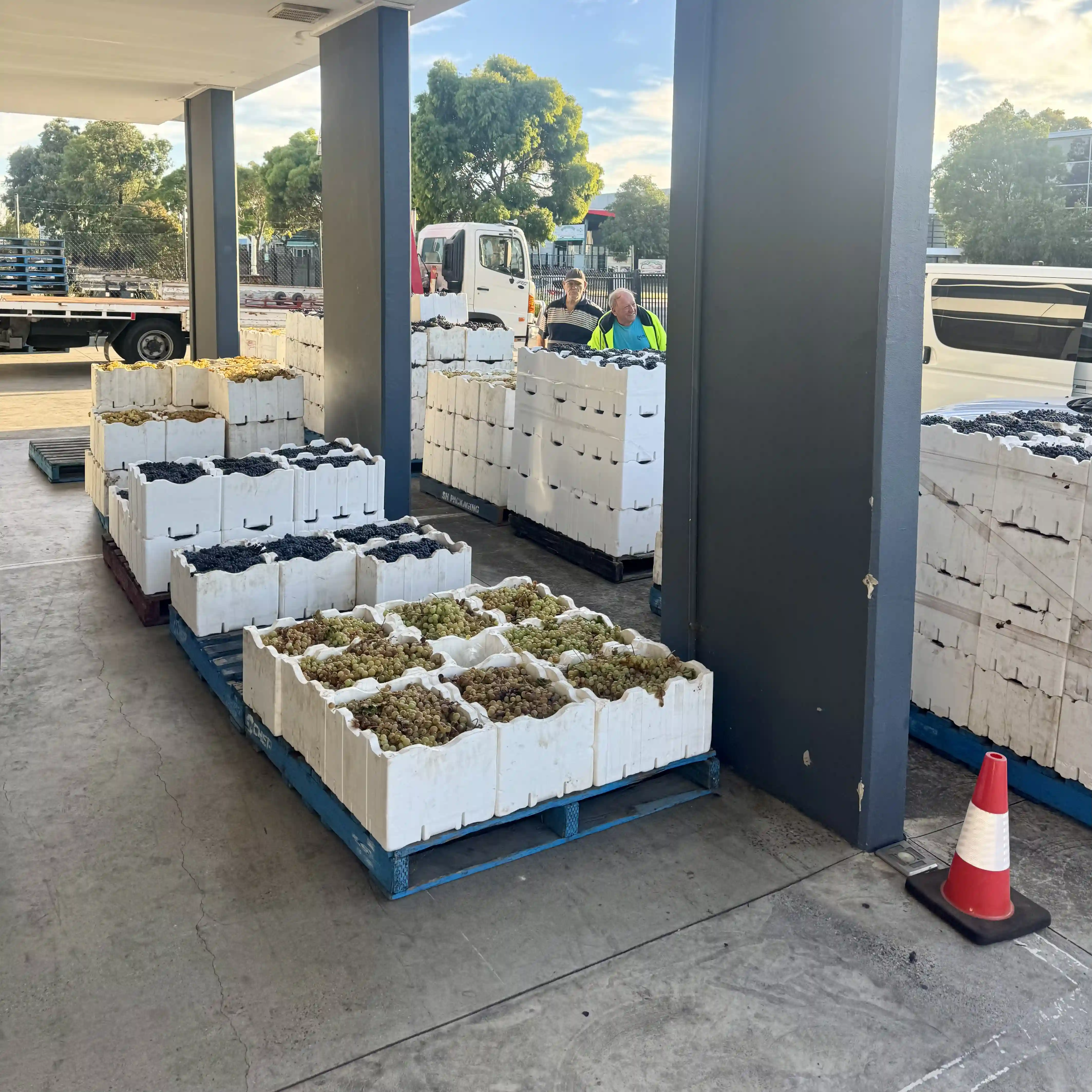
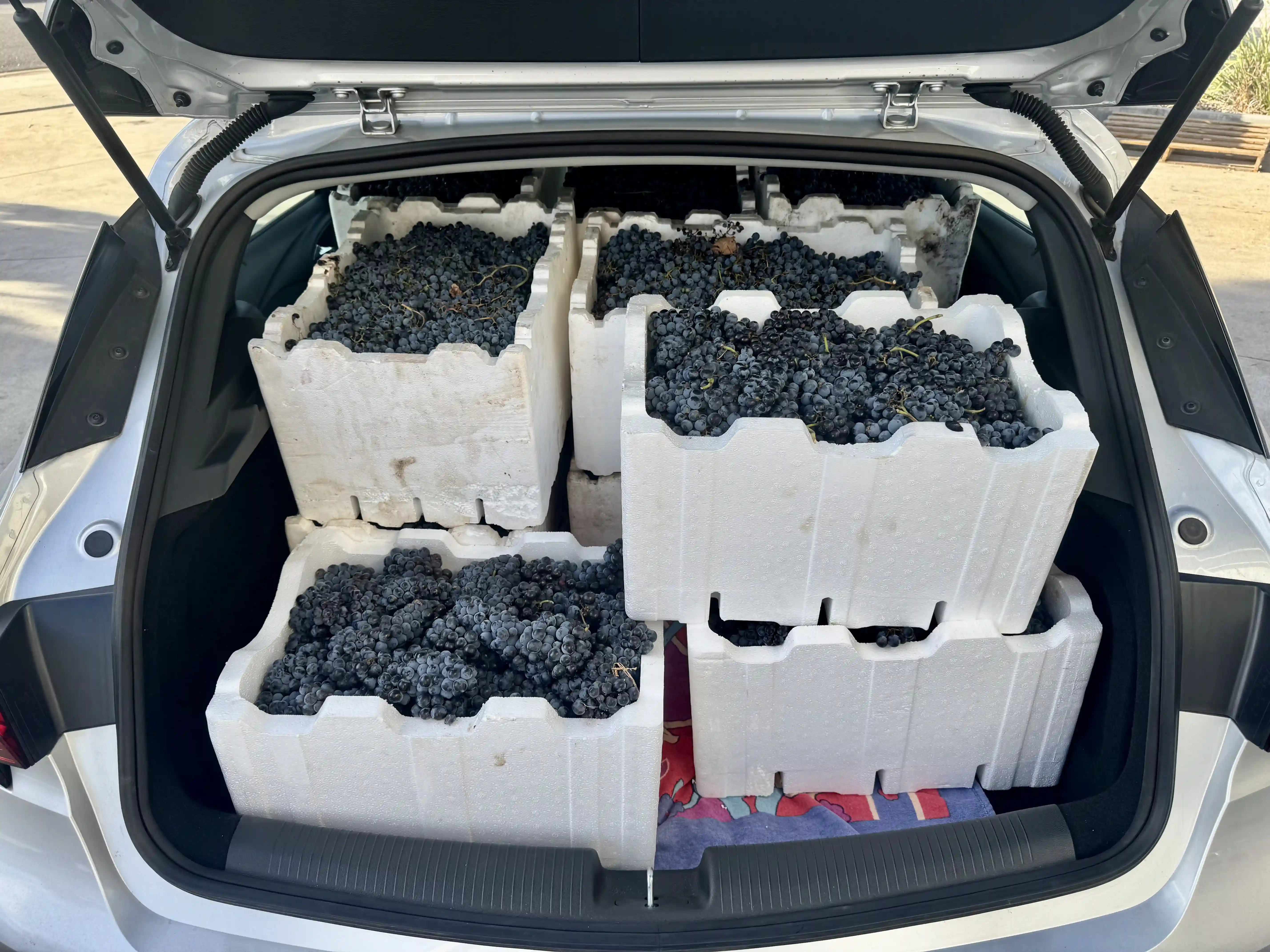
I made a call to Hamish to double check that this was all good. He was concerned about the exploded truck, but was sold on the beautiful drop. I bought 10 boxes of cab sauv and 5 boxes of merlot, then squeezed them into Sarah's car and made my way to Hamish's place.
2. Crush
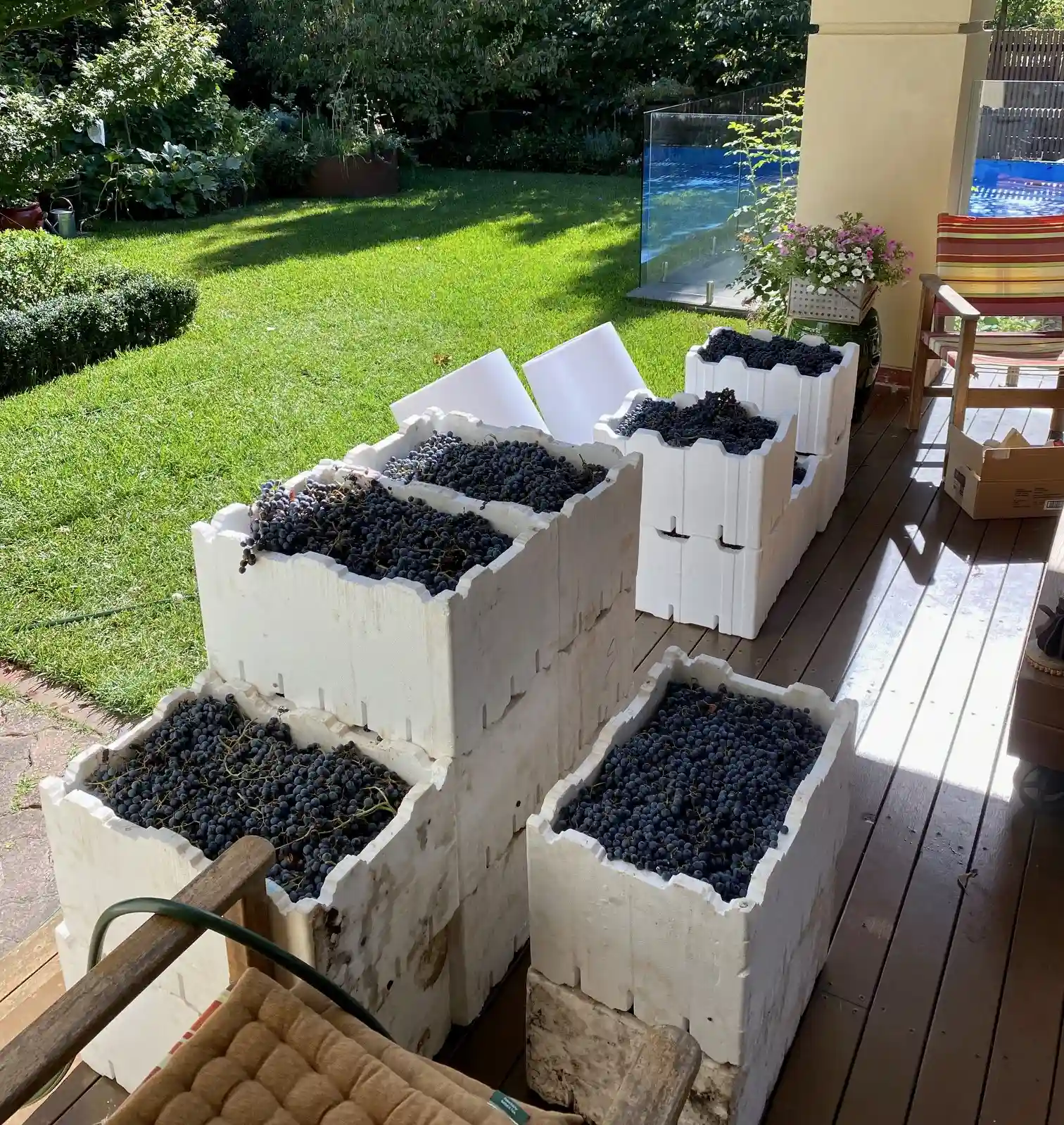
We began at 9. Whilst I was securing the grapes, Hamish and Alessio were busy preparing the gear. For this undertaking, Alessio's Nonno kindly lent us his winemaking equipment. Every piece had so much use in its lifetime, so much history. The first of which was the crusher.
The crusher was originally operated by a hand crank that turned the large metal cogs which crushed the grapes to quickly remove them of their juice. This hand crank was removed, and the machine was retrofitted with an electric motor that was far bigger than the original manufacturer had ever envisioned.
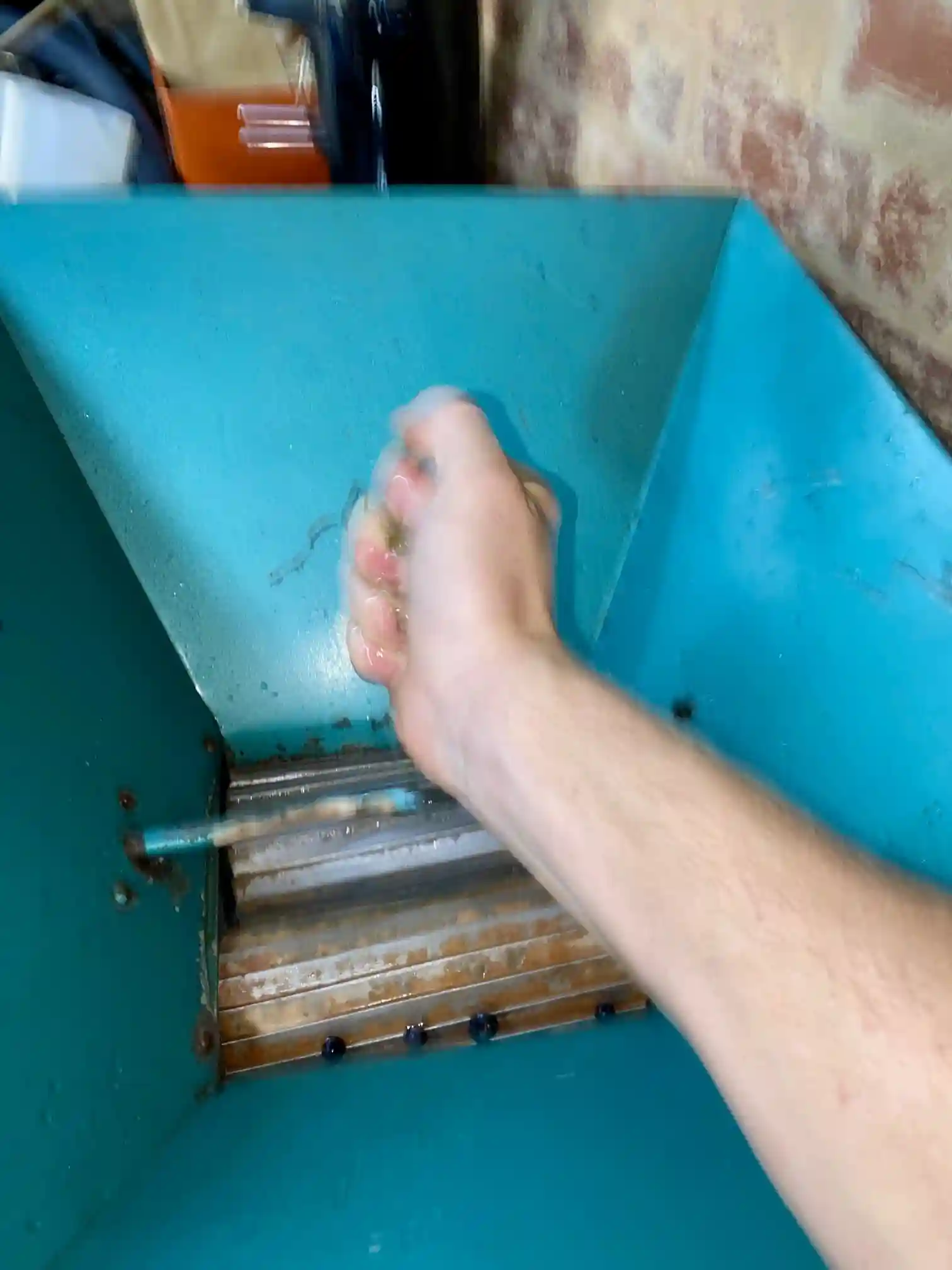
This is the only picture I have of the crusher, it is a symbolic gesture, crushing the first grapes by hand that would proceed to be crushed by the crusher. For a more representative picture, imagine it is full of grapes and they are being crushed.
Before we could crush however, we had to clean the grapes, starting with the merlot. At first, we were thoroughly washing the clusters and removing each grape from the vine, then rinsing them before putting them aside for crushing. The merlot was tightly packed, optimised to fill the space, so it was quite difficult to get into each crevice. After almost an hour, we had barely gotten through 2 boxes. We had to speed things up.
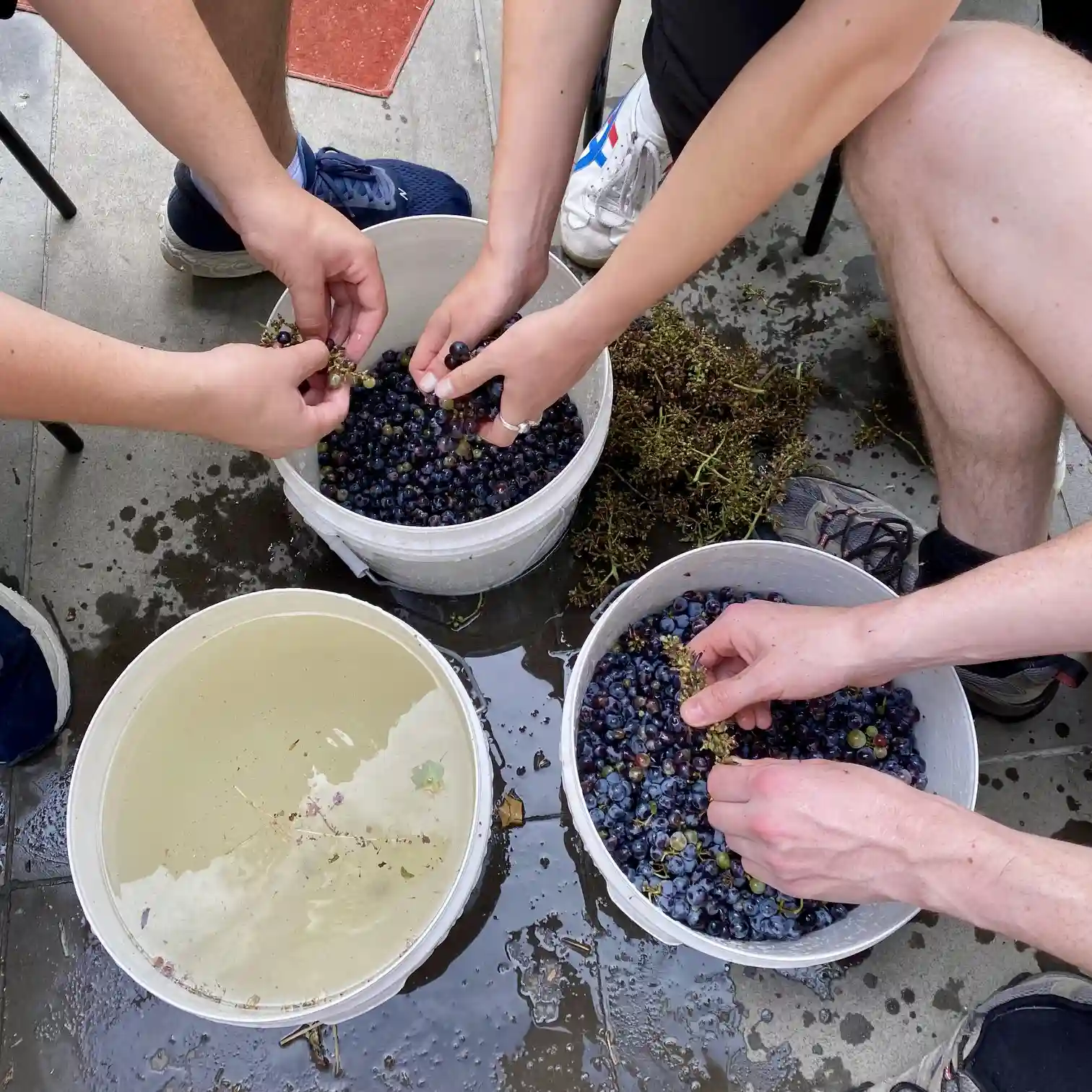
Doing some research, we found out that many winemakers just leave the vines in with the grapes for the fermentation process. This was as good an excuse as any, so we got much quicker and less precise with our washing. I developed a technique of vigorous shaking to remove the debris. This debris included snail shells, spiders, and even earwigs. Because of this, we cannot guarantee the purity of the final product, as it would have taken multiple days to clean each grape, by which time they would have become yucky. I'd prefer snails to yucky grapes.
We practiced a mantra of "no grape left behind". Any time a grape fell aside, we picked it up and returned it into the fold.
Each time we cleaned a full box of grapes, we sent them to the crusher. This machine was awesome. You just put the grapes in and juice (along with grape skins and vines) comes out. Doesn't get easier. Hamish had one 100L and one 70L food grade bucket, we figured we'd have 20L leftover as each box was reported to make 10L of wine. However while we were crushing the merlot grapes into the 70L bucket, we started to notice something. At only our second box, we were halfway to to the top. We would not be able to contain the sheer volume of wine that this task demanded of us. This required some strategic thinking.
I immediately open facebook marketplace. Based on the merlot statistics, we were expecting to get up to 270L total. And considering we needed a spare bucket for siphoning, we decided to go big. There was a woman in Thomastown selling extremely large food grade barrels for extremely cheap. A 220L barrel was quoted at $15. What a deal. So Sarah, Hamish and I decided to take lunch and drive up to Thomastown, and what a journey it was.
We got to the house and knocked on the door thrice before we were kindly greeted by the homeowner. She guided us towards the backyard, where there were at least thirty of these 220L barrels, and another twenty 75L barrels. She opened a barrel so that we could see for ourselves. We each, in turn, popped our heads over the barrel to take a look. It was at this point we all realised the reason for the price. Every single barrel had an incredibly potent smell of Kalamata olives. They were used to import olives from Greece. We knew we didn't have time to change the plan, so this would have to do. The olive lady recommended we leave the barrel out in the sun for a few days for the smell to dissipate. Oh if only she knew.
We picked up that 220L barrel, as well as one of the smaller ones and headed back to Hamish's to finish the job. The initial merlot was poured into the 100L bucket, then we finished it off. Wash, crush, wash, crush, wash, crush. Meanwhile, the Kalamata olive barrel was receiving much needed treatment to remove the oily olive coating that covered the inside. We washed and rinsed with soapy water three times, then used methylated spirits, then washed it once more. The olive smell was still there, albeit much less pronounced. We figured that 200L of wine and grape skins would overcome the olives.
Wash, crush, wash, crush, wash, crush. It was 5 PM by the time we'd polished off the final box. Hamish and Alessio fed the grapes some yeast to aid the fermentation. The next step was to wait 2 weeks to let the wine ferment with the skins.
3. Press
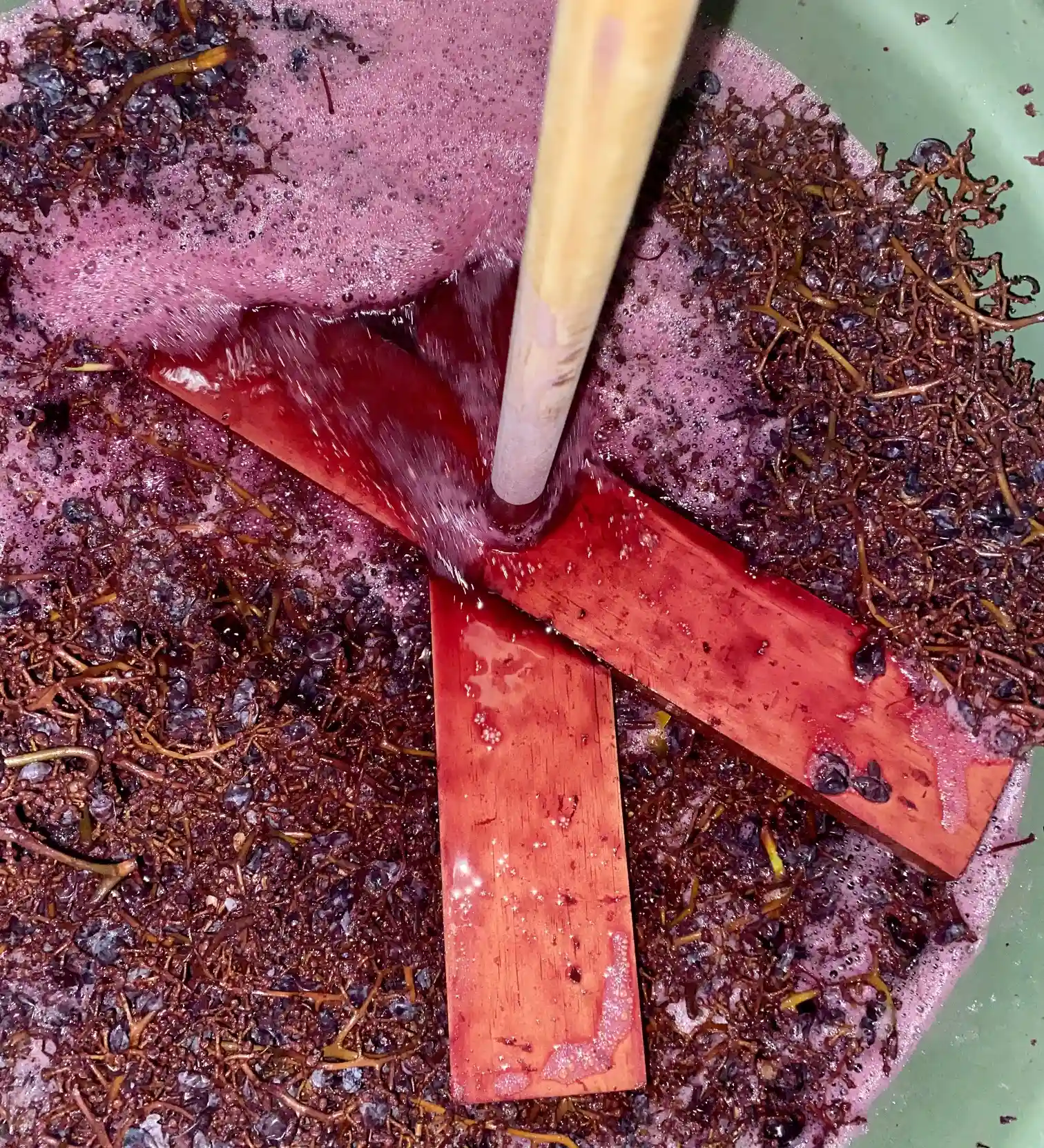
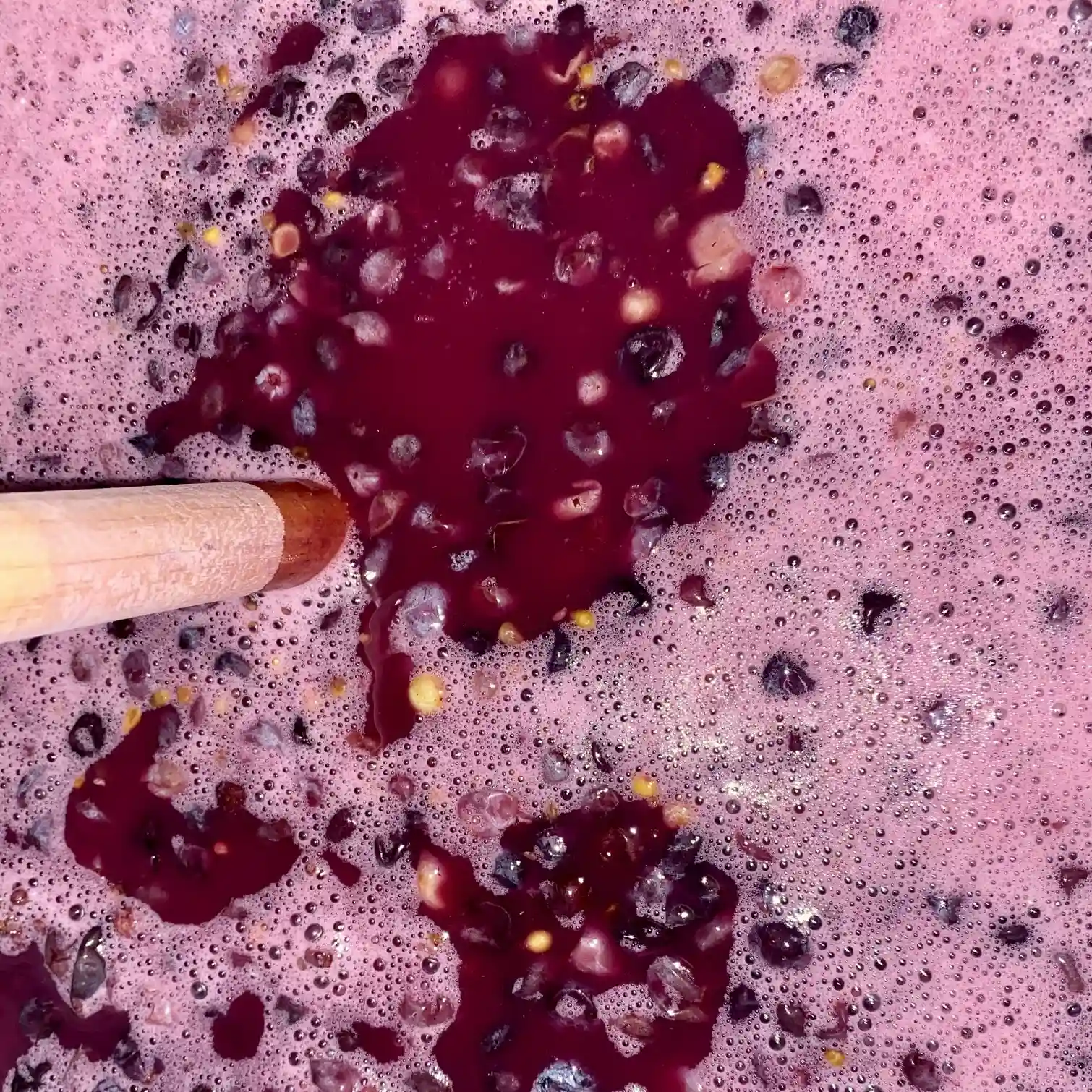
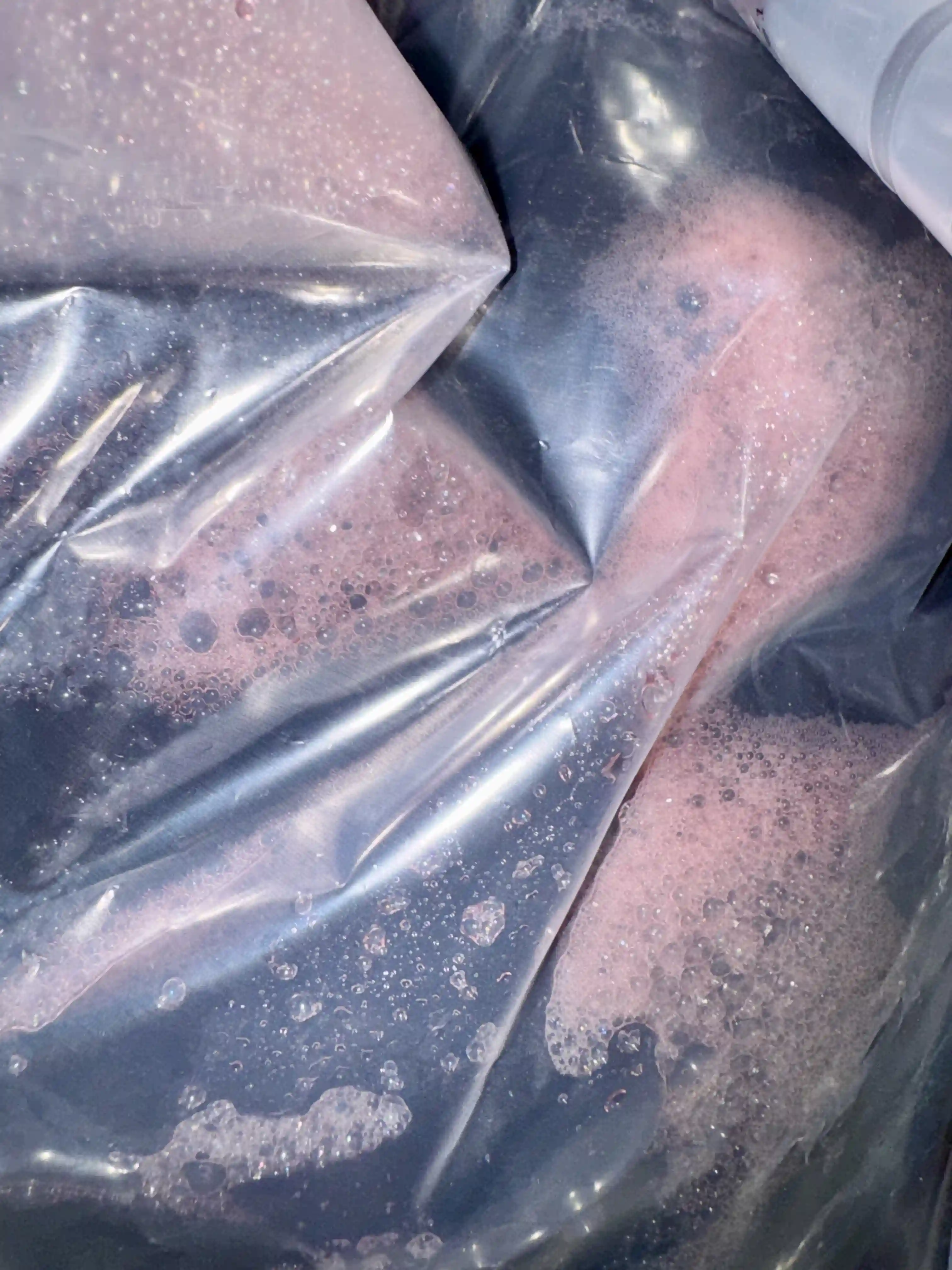
Not a week into the fermentation process, I get updates from Hamish such as "those yeasties would definitely have been getting stressed" and "purple foam which looks like the goo from the cat in the hat and wobbles like jelly." March was a quite a bit hotter than usual this year, so the fermentation was occuring at a rapid rate, and we didn't have a temperature controlled room. So the Sunday after crushing, I went over there to press the merlot. Hamish and Alessio would go on to press the cab sauv the following day.
Inside of the bucket, the grape skins and vines floated on top of the wine (and it was actually wine at this point). Leaning over the opening exposed one to a rush of alcohol. It was so strong I had to sit down. The cab sauv was stronger than the merlot, likely because the smaller opening and thicker plastic resulted in higher temperatures and a quicker fermentation.
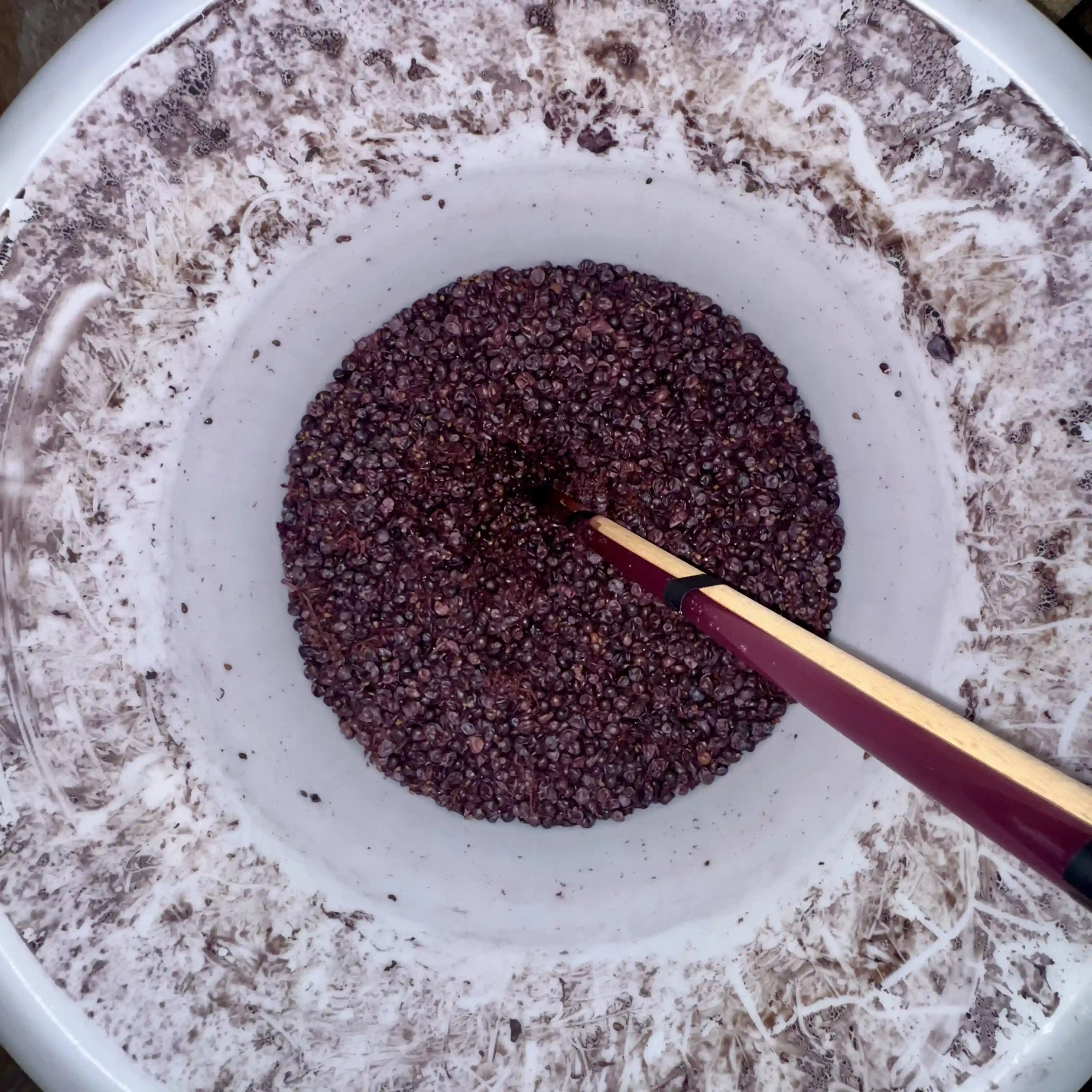
The bucket we were siphoning from.
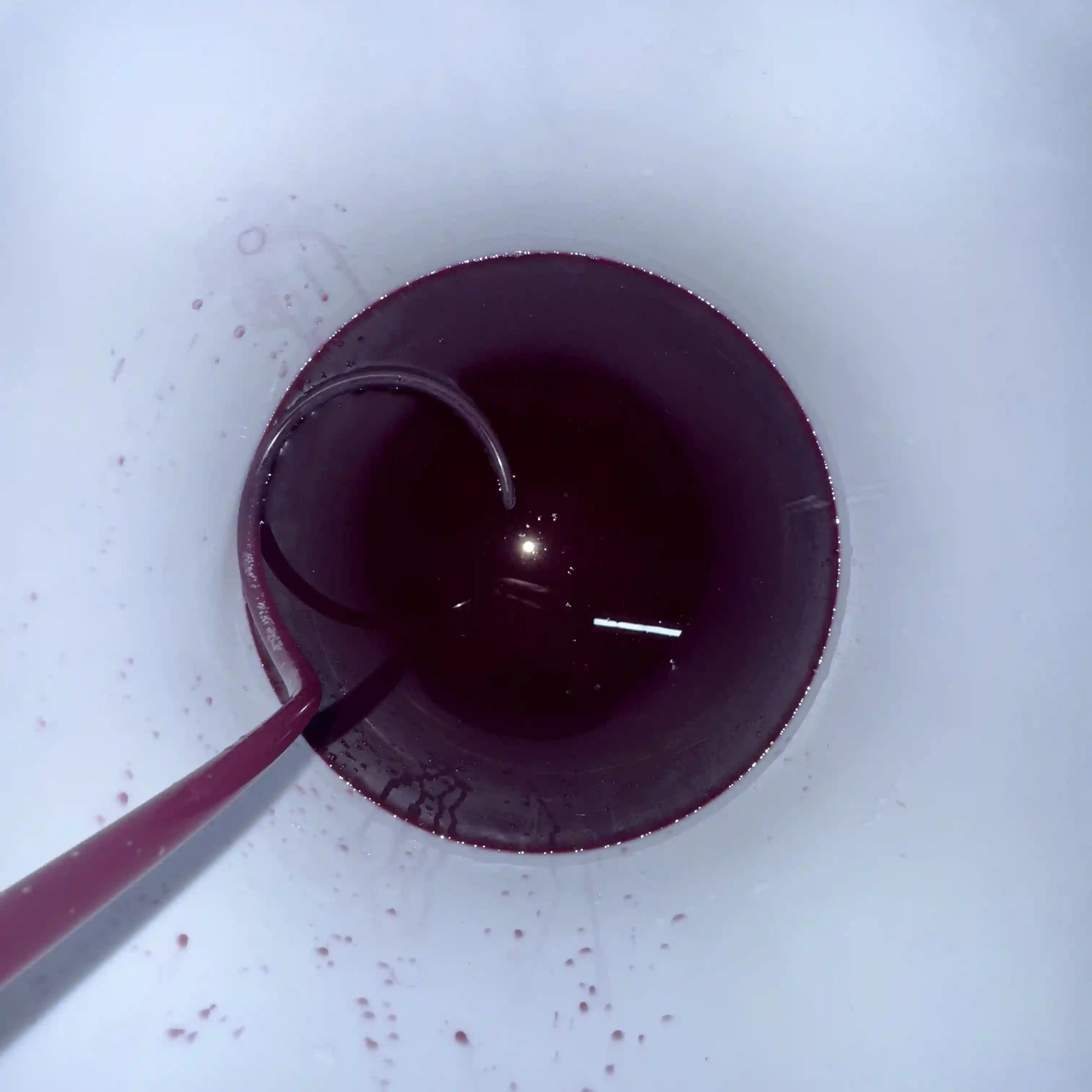
The bucket we were siphoning to.
Our goal was to seperate the wine from the grapes. First, we siphoned the wine out from underneath. This was a fun task, you sip through a big bendy straw until the wine is almost at your mouth, then release and watch it flow. The wine was a beautiful deep purple. This was quick, and soon we were onto the main event, the press.
The press is a device designed specifically for squishing grapes until they are bone dry. It looks like a wooden barrel on top of a metal dish, accompanied by a giant ratchet mechanism which presses a disc. The ratchet has two gears. The first gear was quick and easy, we were getting so much juice out of these grapes. It was a blast. We thought we'd be done in no time. However, as the juice came out, the grapes became tired. We could only put them through so much, and the first gear could no longer be pushed without moving the whole press. This is where the second gear comes in.
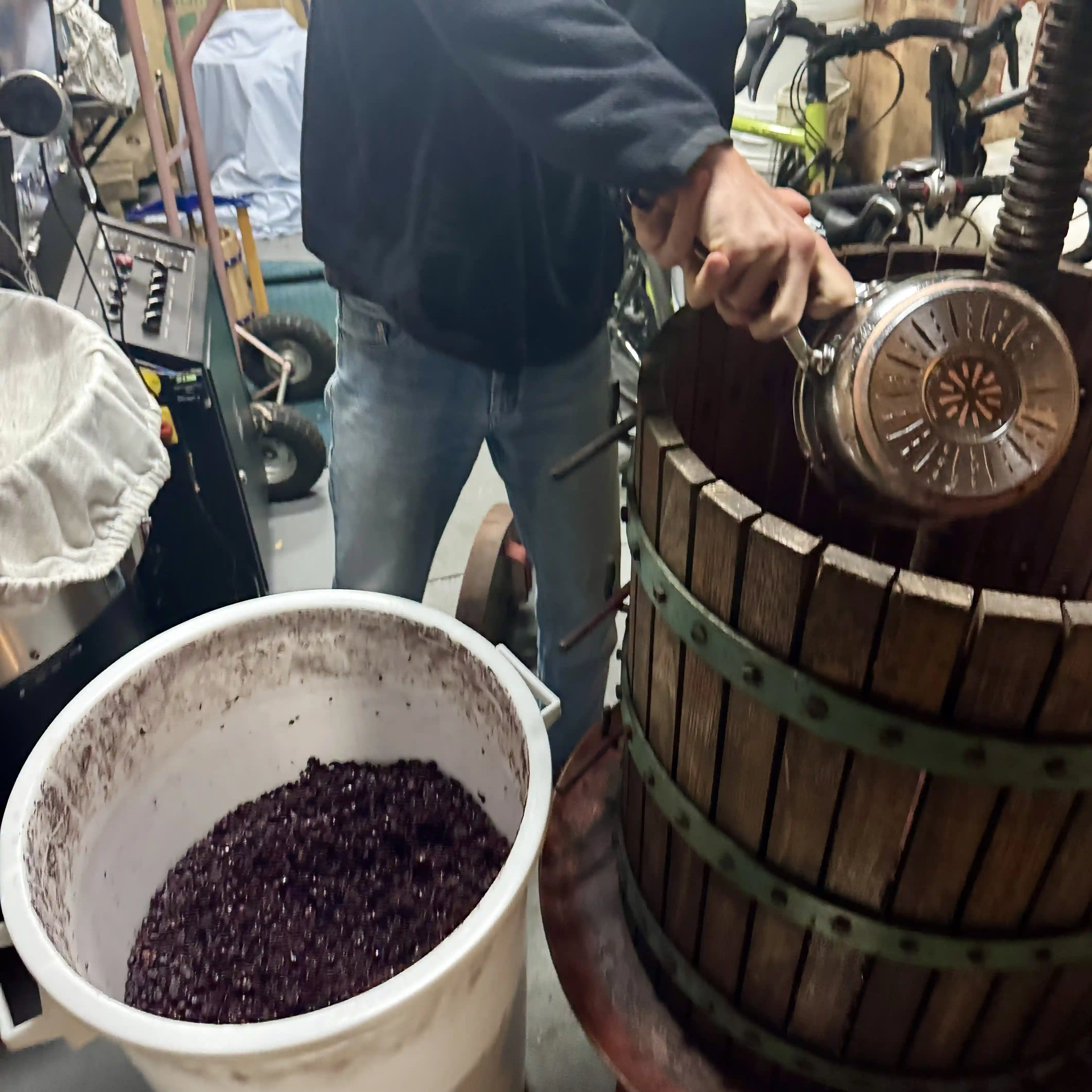
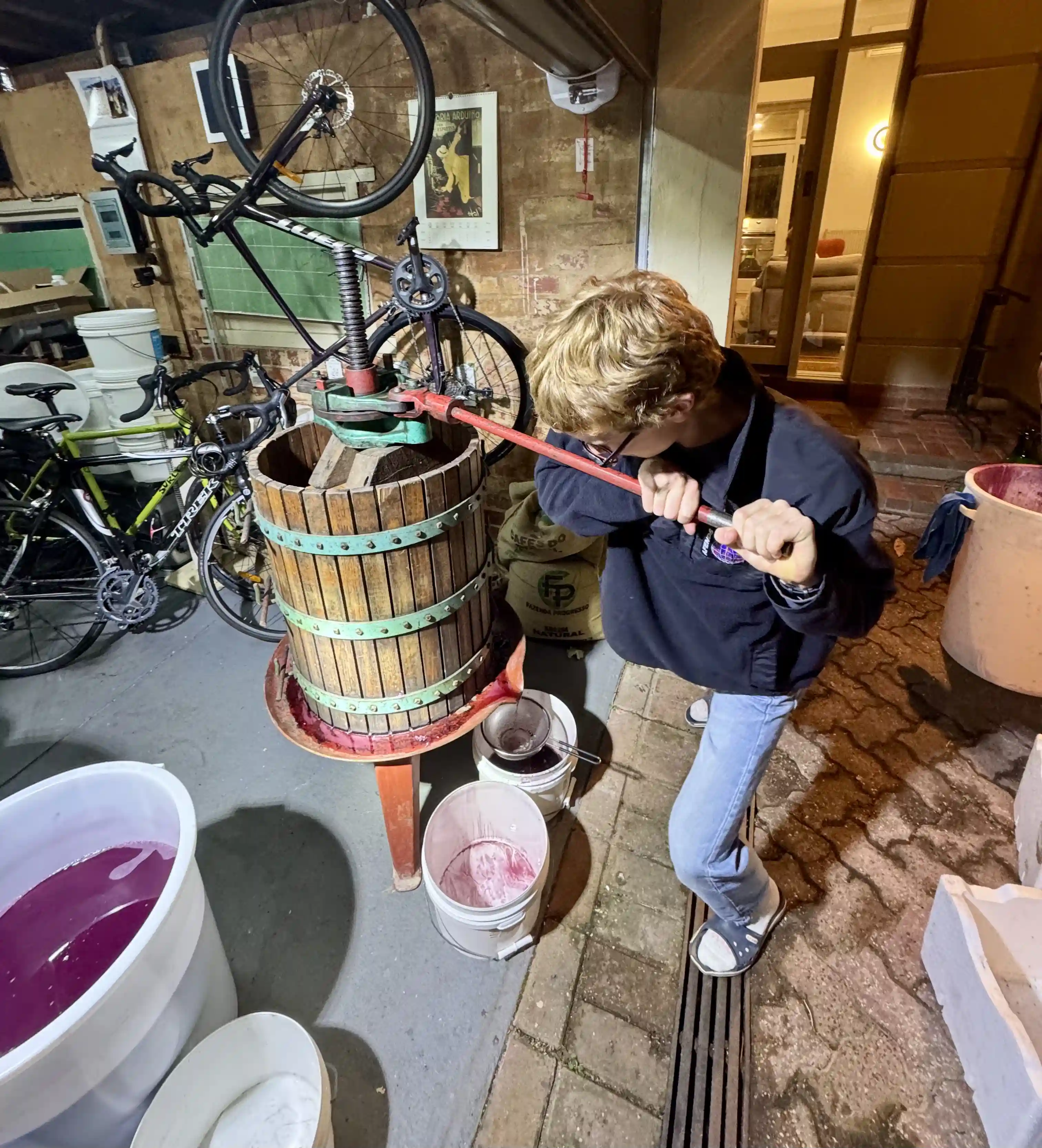
Our goal was not to get "as much juice as possible" out of the grapes, our goal was to get "every last drop". We had grand visions of a puck. A puck so dry and so dense that it wouldn't deform under even the greatest pressure.
So we pushed on further, until the liquid that was coming out was no longer a deep purple, rather a silvery violet. In hindsight, we should have put sandbags on the legs to avoid the entire thing moving when we pushed too hard.
Eventually, we decided that enough was enough, and we disassembled the crusher. It was like opening a sealed vault. Behold, the puck.
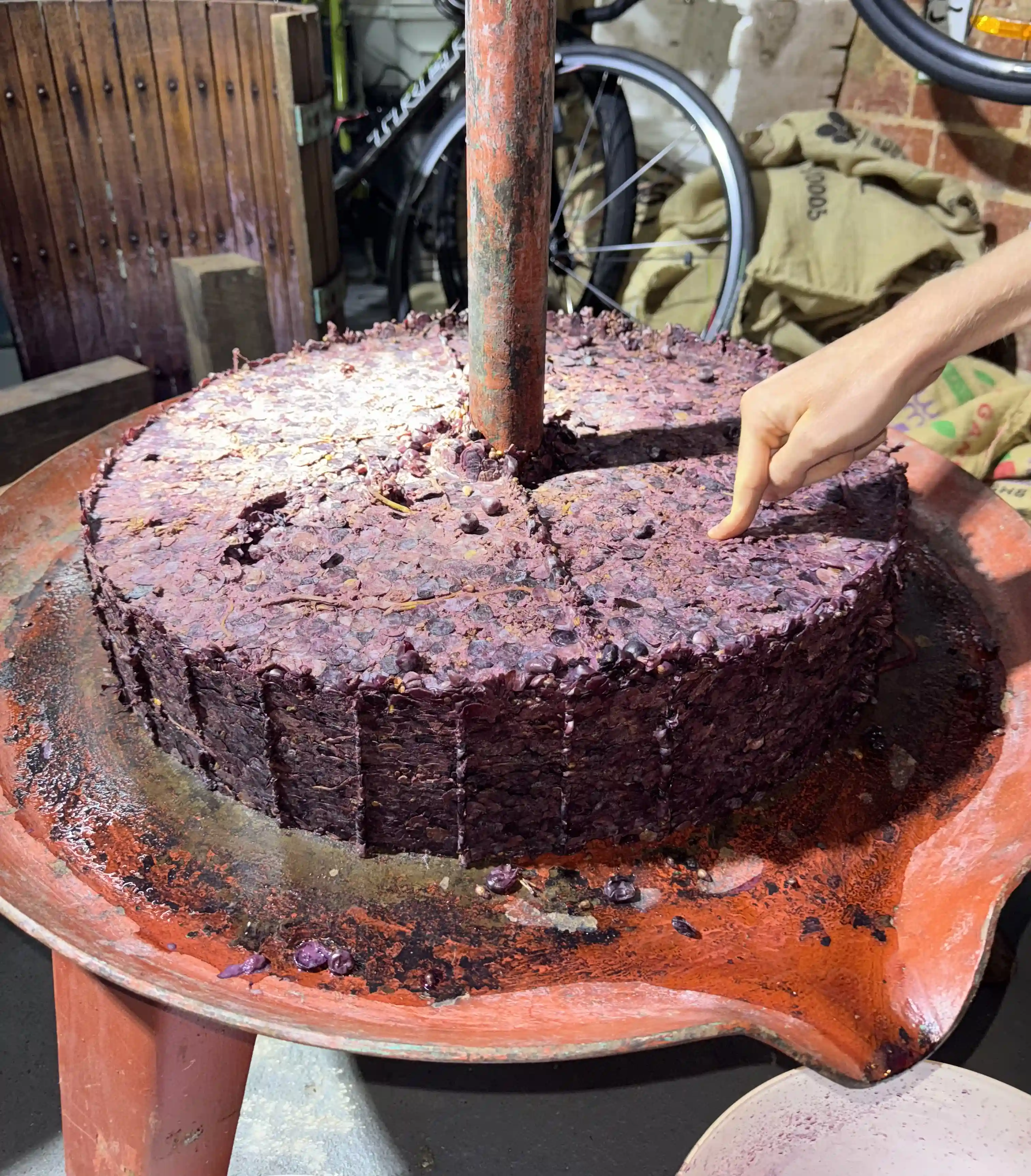
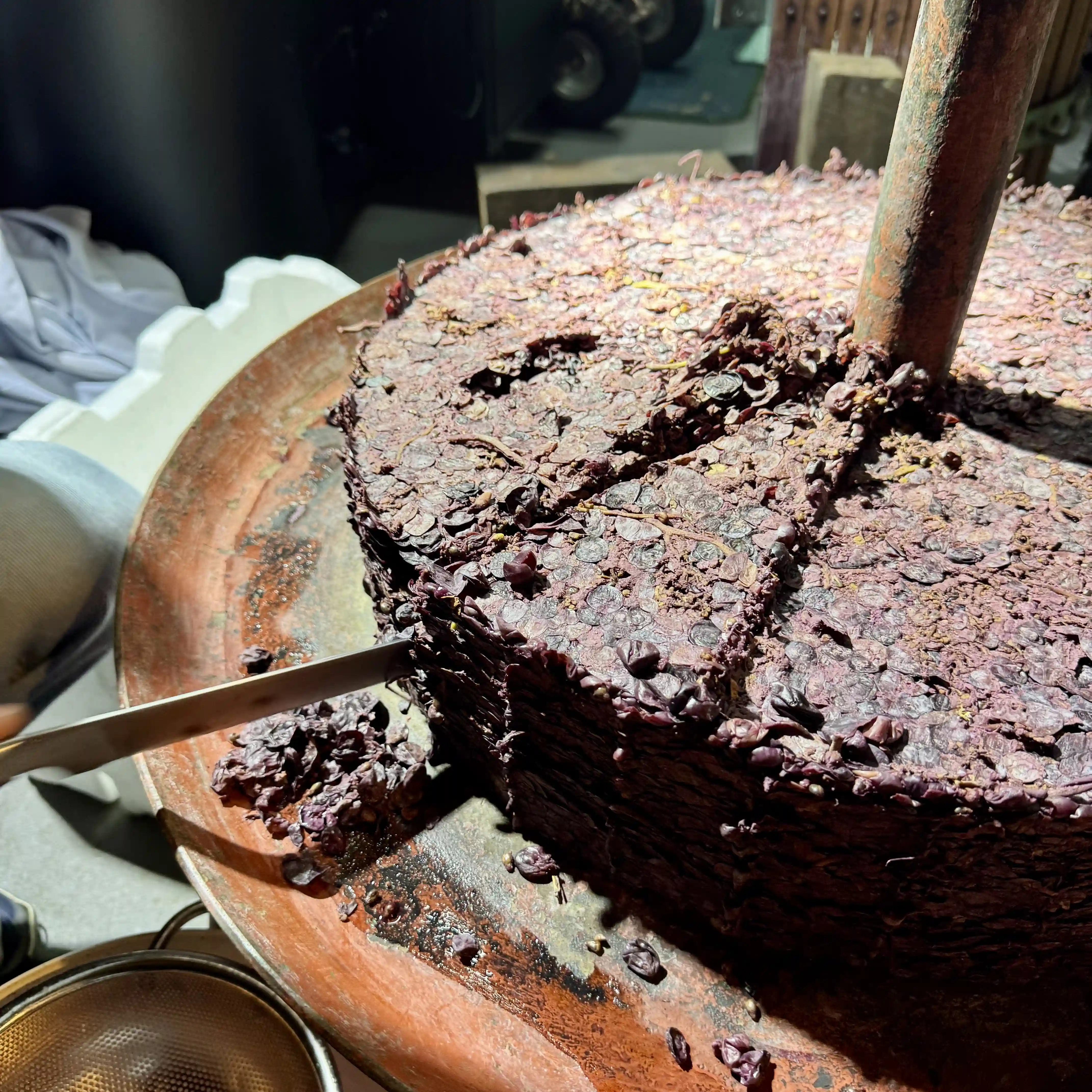
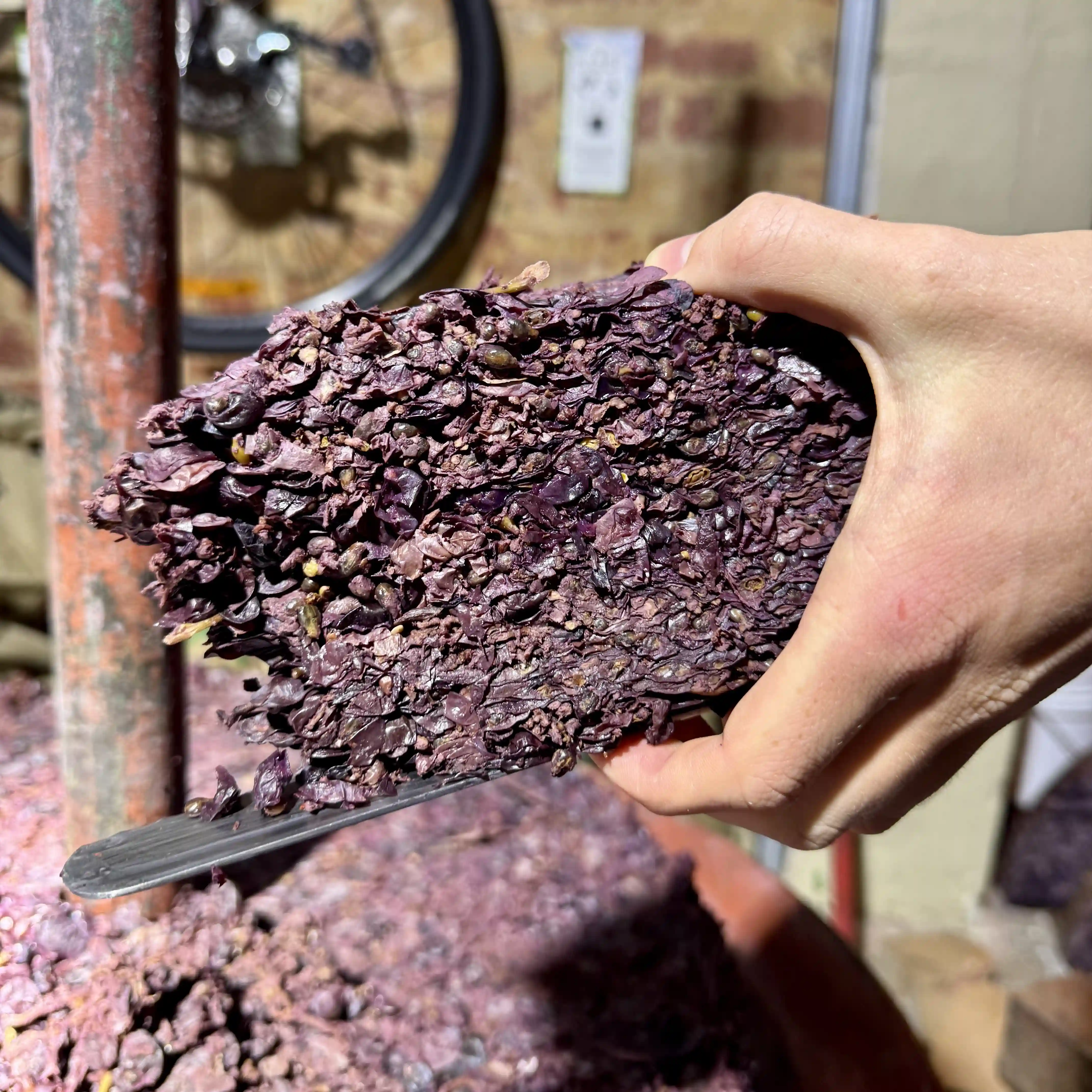
The puck was dry. The only moisture to be found was deep in the center.
4. Store
Back to the wine. We now had a bucket full of pure Merlot, not a drop lost. We now had to store it to let it finish fermenting. Let me introduce the demijohn. Although the demijohn starts with demi, it is not half of anything. It's as big as it gets. We had three 54L demijohns, one for the merlot, and two for the cabernet sauvignon. This was a serious operation.
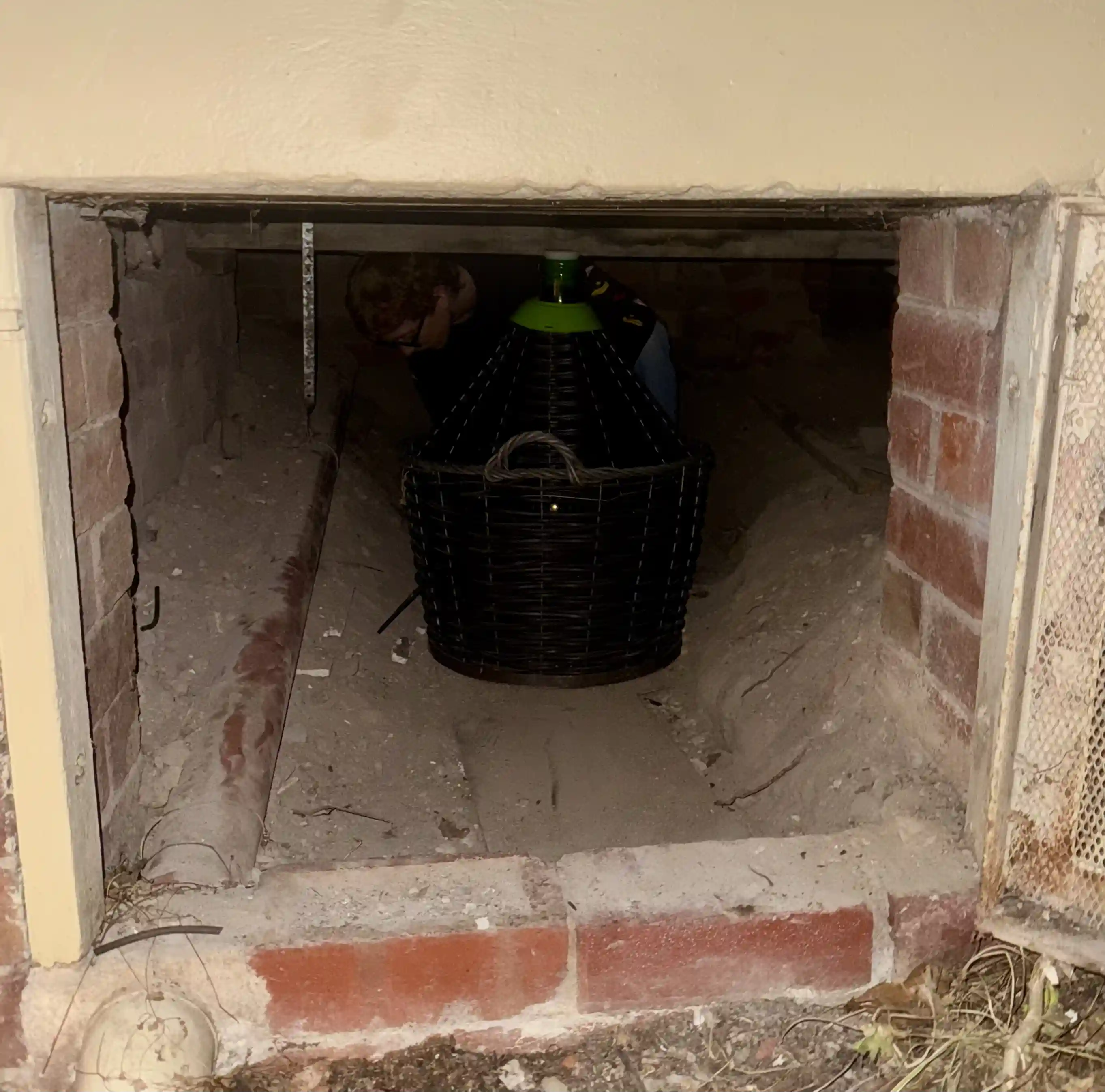
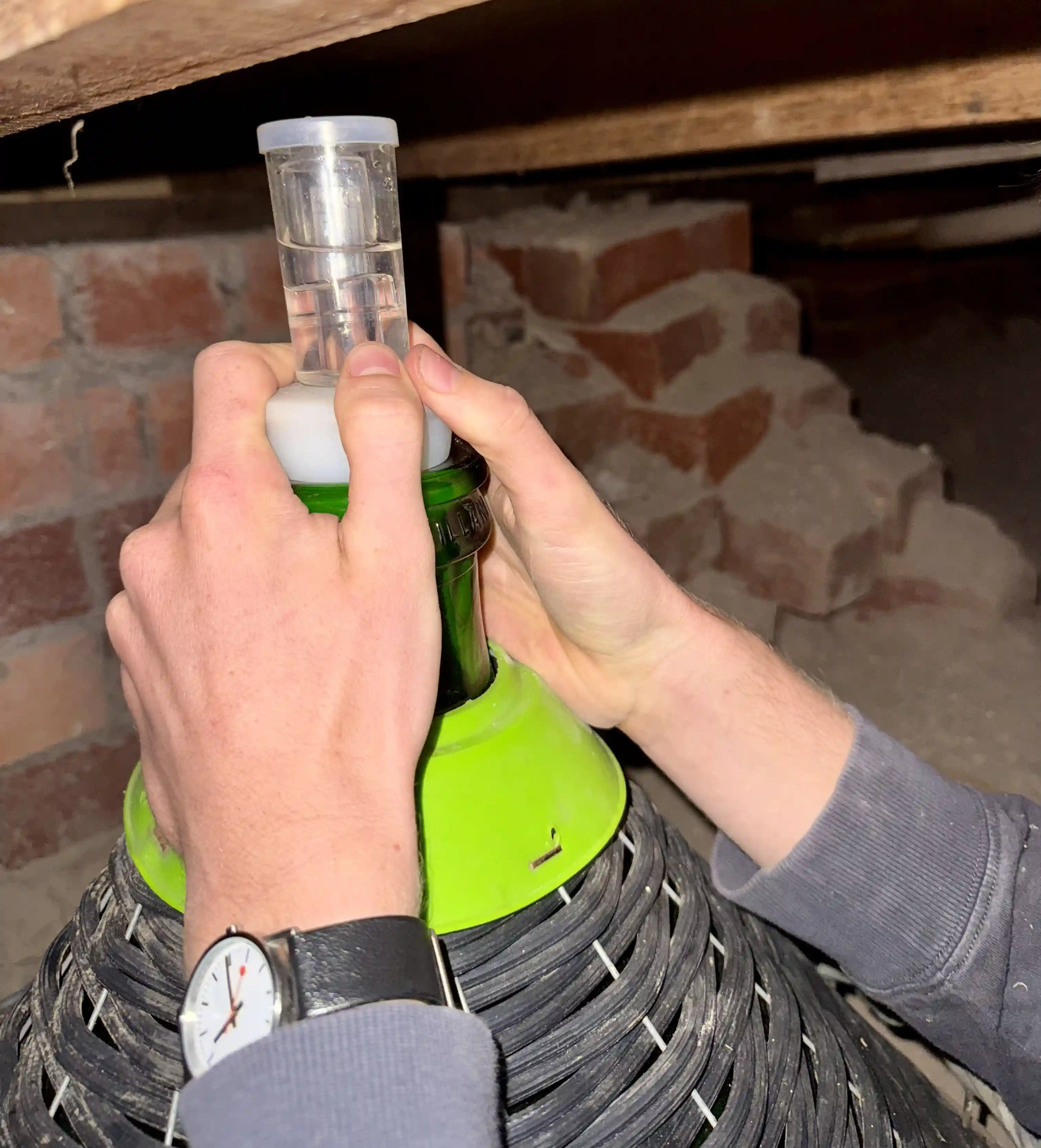
Getting the wine from the bucket into the demijohn was simple, we just siphoned it in. The tricky part was the next step, putting a demijohn full of wine underneath a house. The opening to go under Hamish's house was small, roughly two thirds of the height of the demijohn. This meant it had to go in on an angle, being careful not to get any wine on the rubber seal (can't remember why we had to do this). Hamish crawled inside to pull, and I pushed from the outside.
It was a delicate operation, but we managed to get it through the opening. We were under the house. We just had to repeat the tilting manoeuvre to get it under a beam, and slide it on through. This was the last time I'd see the wine for 3 months. Hamish and Alessio did steps 3 and 4 the following day with the cab sauv.
5. Rack
June had come. Time to rack the wine. Racking is the process of siphoning the wine from one demijohn to another, but leaving behind all of the yucky stuff that fell to the bottom. This meant we had to be very careful when taking the demijohns out from under the house, as we didn't want to agitate the wine and re-suspend all of the particles.
This was easier than the last time, since Hamish realised he could (temporarily) remove a couple bricks from the opening. After some struggle, we had three full demijohns out on the deck, plus two empty ones for the transfer.
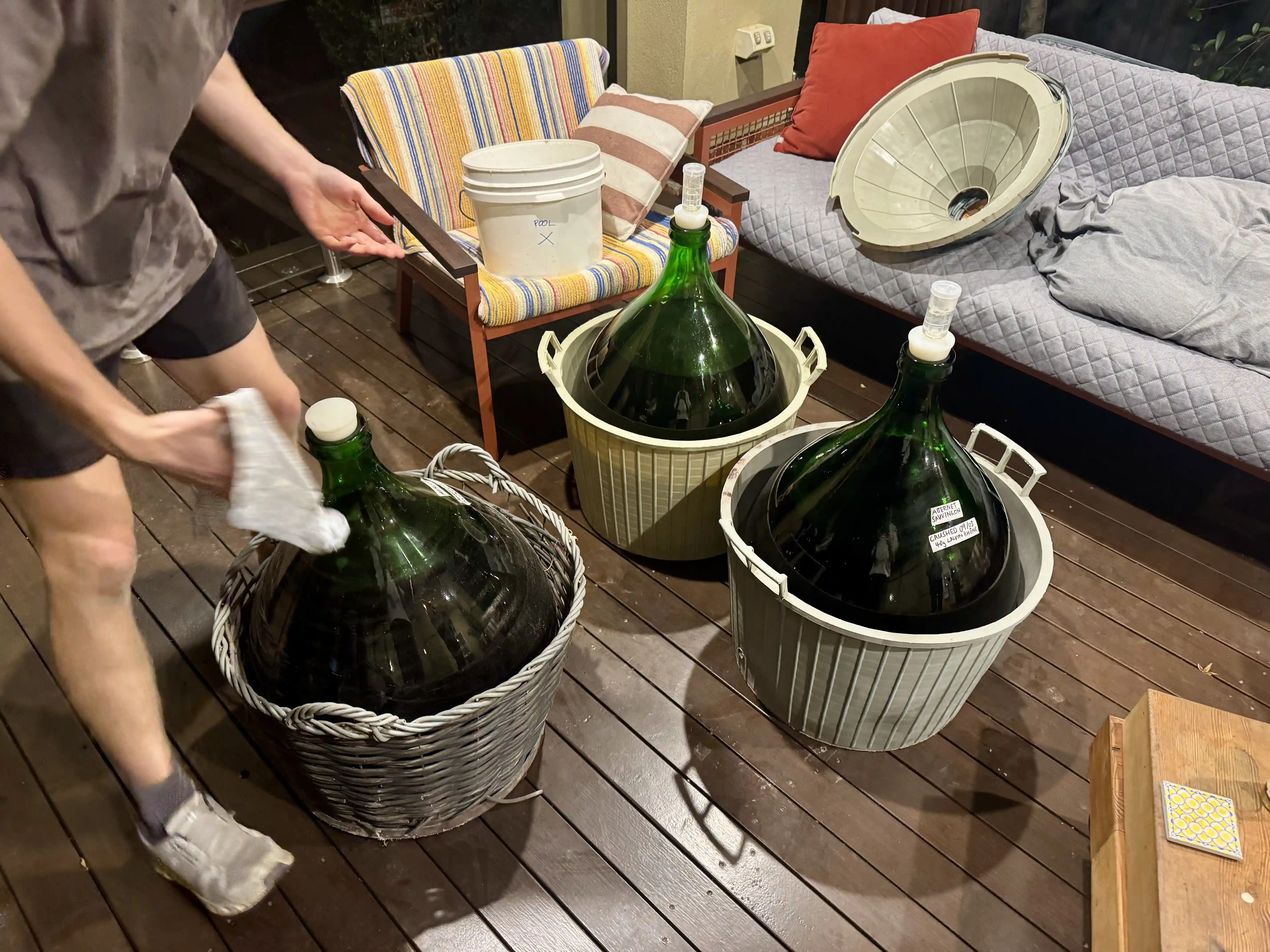
Racking itself is quite easy. Just one demijohn next to the other, the full one raised, and siphon. The exciting part of this step was that we got to taste each wine. Below are our tasting notes from the session.
Wine Notes
Cab Sauv 1
- Not dry
- Light
- Mellow
- Round
- Drinkable
Cab Sauv 2
- Dry
- Acidic
- Alcohol-ey
- Bright
- Unbalanced
- Sharp
Merlot
- Fruity
- Sweet
Cab sauv 1 (or CB1) was the favourite. It was actually a decent wine I would not mind drinking (the bar was low). CB2 and the merlot were kind of accompanying opposite ends of the spectrum. CB2 was quite harsh and not very enjoyable, but it had lots of flavour. It was closest to the door to get under the house, so it would have had the most fluctuation in temperature. The merlot was the opposite (and was deepest under the house), it barely tasted like anything, with hints of fruity sweetness. CB1 seemed to live in the goldilocks zone.
At this point I had no idea about how the taste of wine develops depending on the conditions (I still don't). We thought that if CB2 and the merlot were to maintain their flavours, then we could combine them into a blend. The merlot would balance out the harshness of CB2.
We returned the demijohns to where they belonged and waited.
6. Bottle
A colder than average spring came and went. At the end of November we regrouped to perform the most important part of the process, bottling the wine. Hamish had purchased over a hundred corks from The Artisan's Bottega as well as some bladders.
By this point we were veterans of going under Hamish's house. We had the demijohns out in no time. The first course of action was, of course, to taste the wine.
It was a pleasant surprise. CB1 had developed slightly, but mostly similar to what I remembered. CB2 had vastly improved. The harshness completely disappeared. It moved in the direction of CB1 but was positively different. The merlot developed as well, it no longer tasted like nothing which was a notable improvement, however it was weird. Hamish said it grows on you.
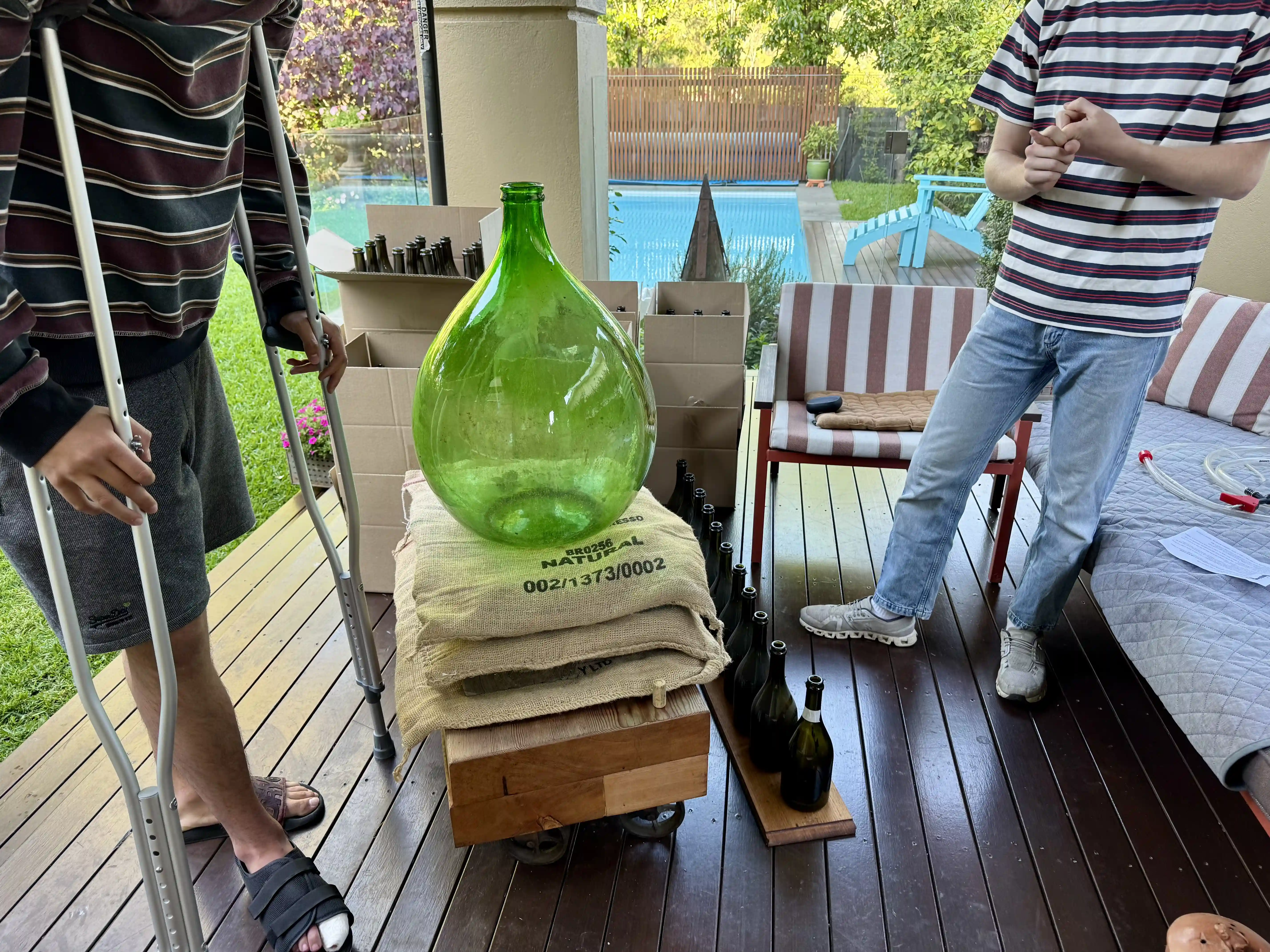
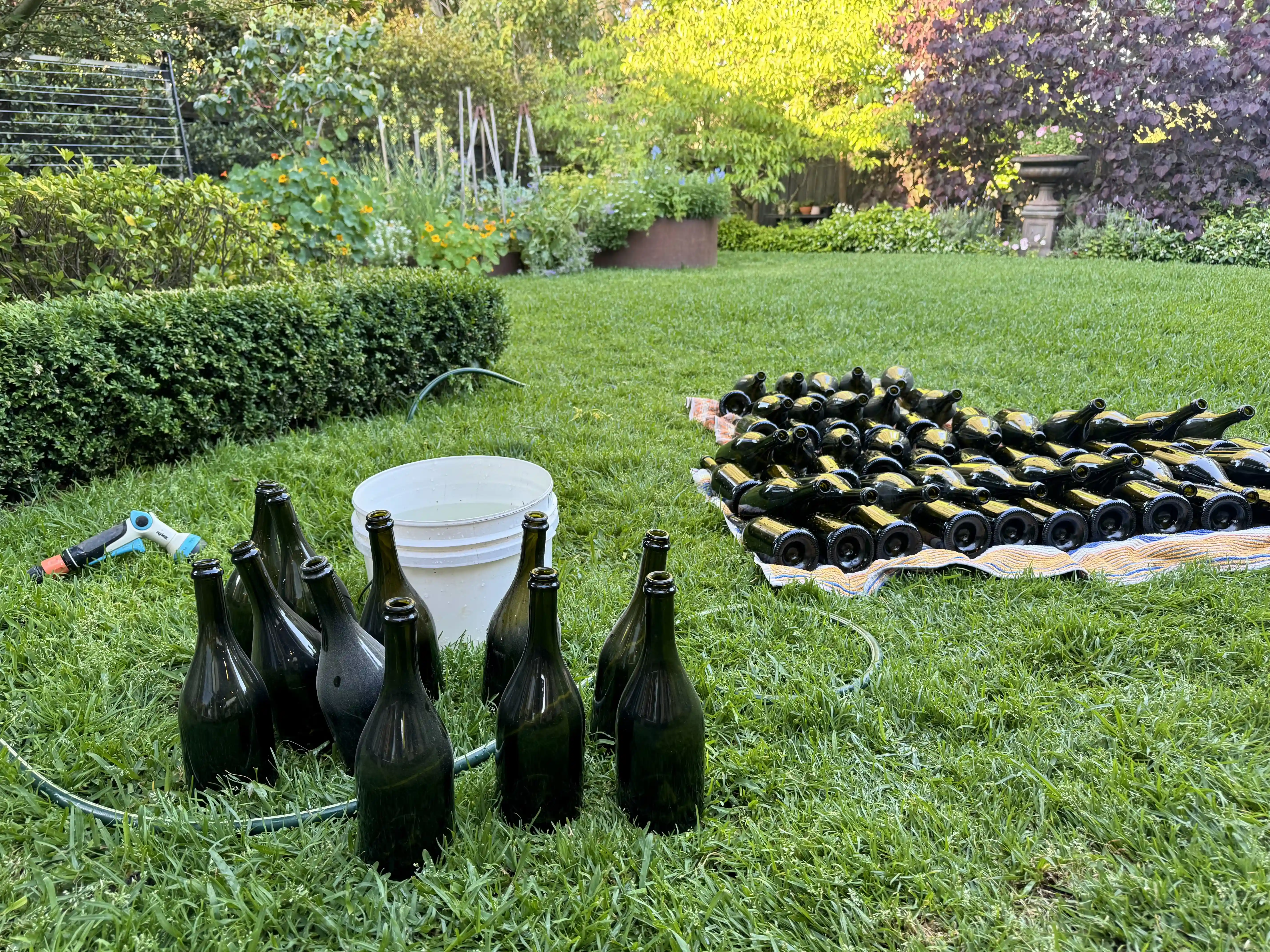
After the tasting session was complete, we had to get to work. The first task was cleaning the dust off the bottles. The bottles were a failed run of champagne bottles that we managed to get for free (thanks David). The opening was slightly too wide to use for champagne. Very nice bottles however. Good thick glass, we'll be using these for years.
The second task was filling the bottles with wine. Along with the corks, Hamish got a nifty siphoning tube with a lever that could turn on and off the flow. This made the job quick with minimal losses.
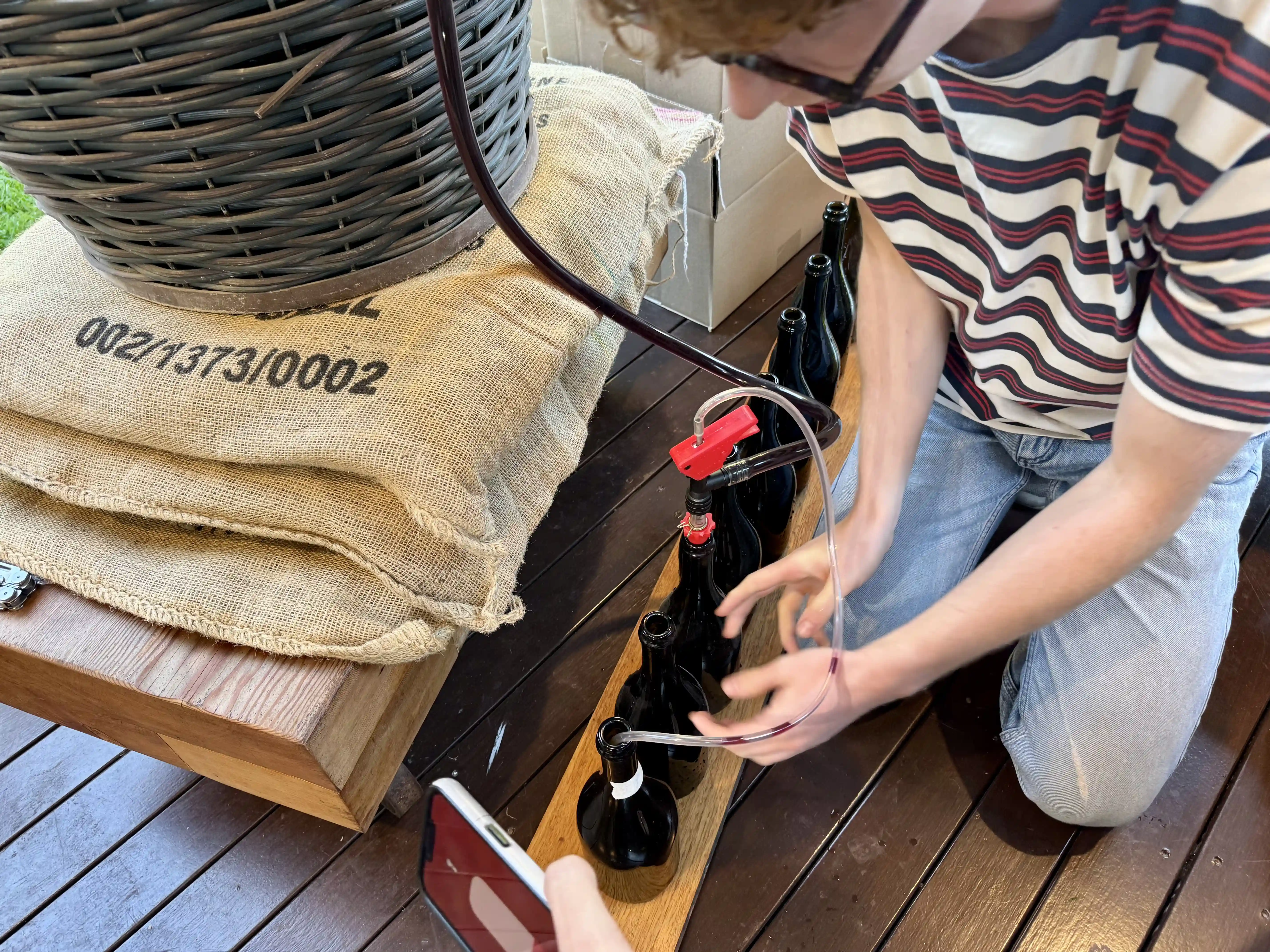
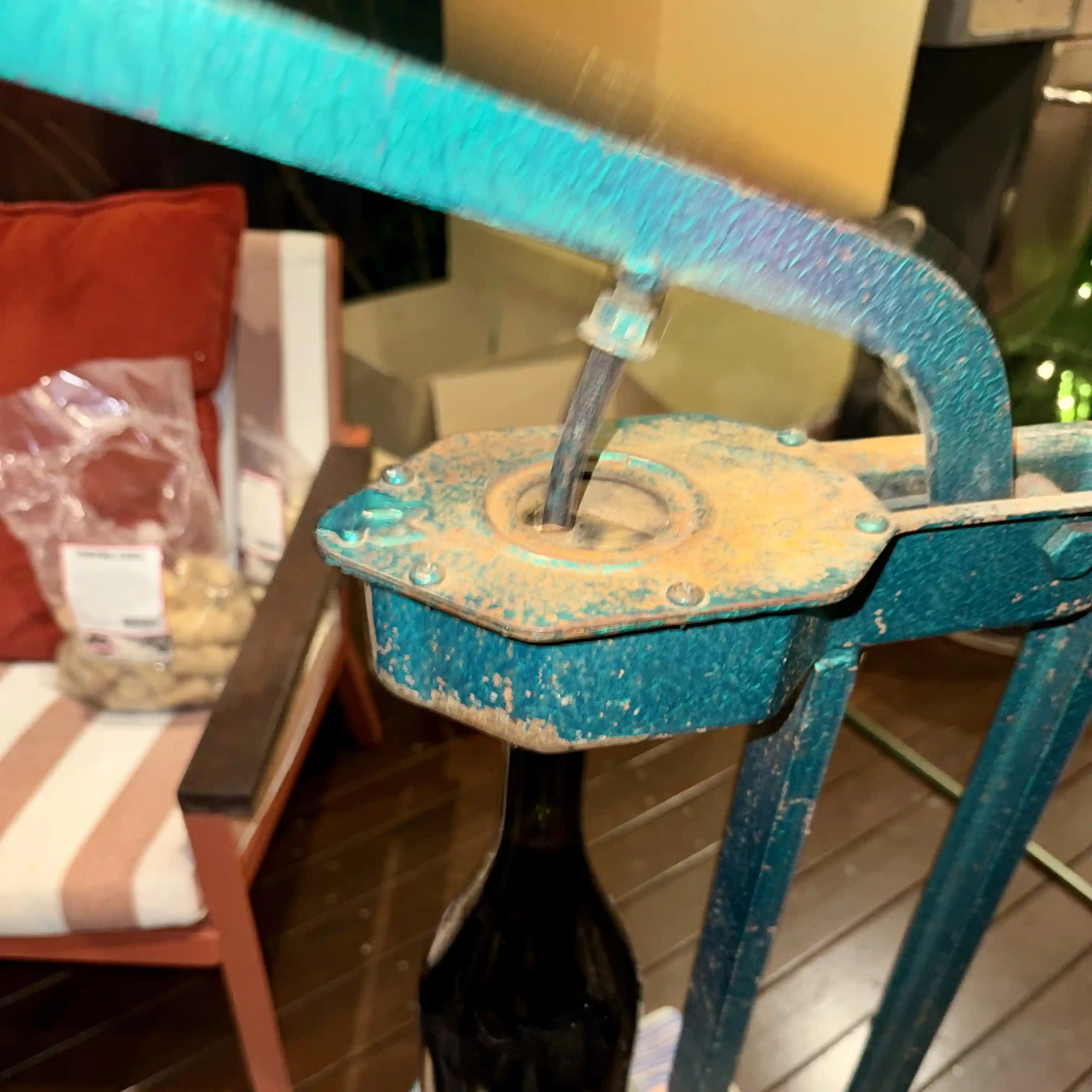
Once a bottle was full of wine, it was transferred to the corking machine. This was the final piece of Alessio's Nonno's winemaking equipment. It uses an aperture-like mechanism to compress the cork whilst pushing it down into the bottle. Quite satisfying.
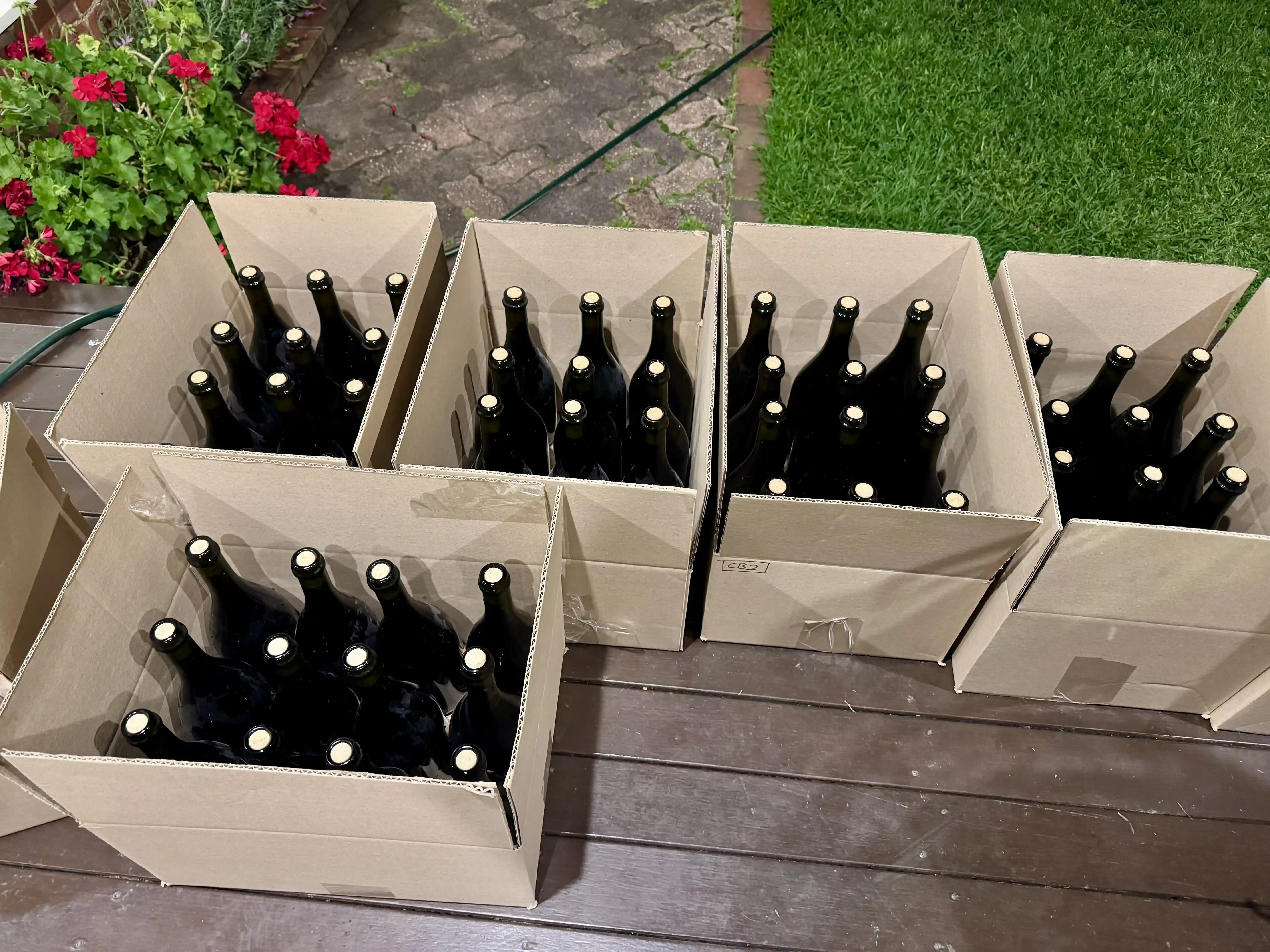
In total, we did 32 bottles of merlot, 32 bottles of CB2, and 60 bottles of CB1. The remaining volume of merlot and CB2 filled 28 litres of bladders (more fondly called goon bags).
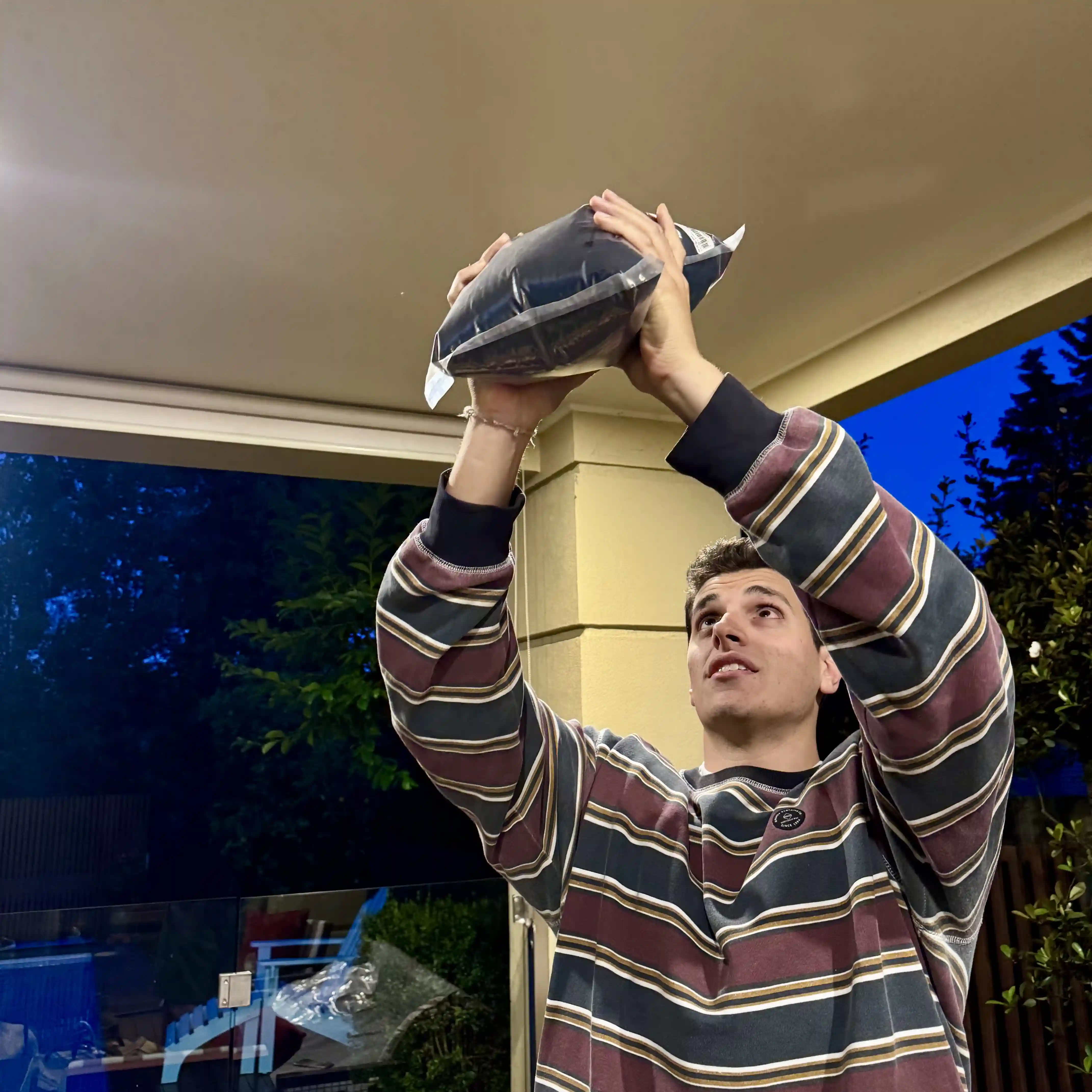
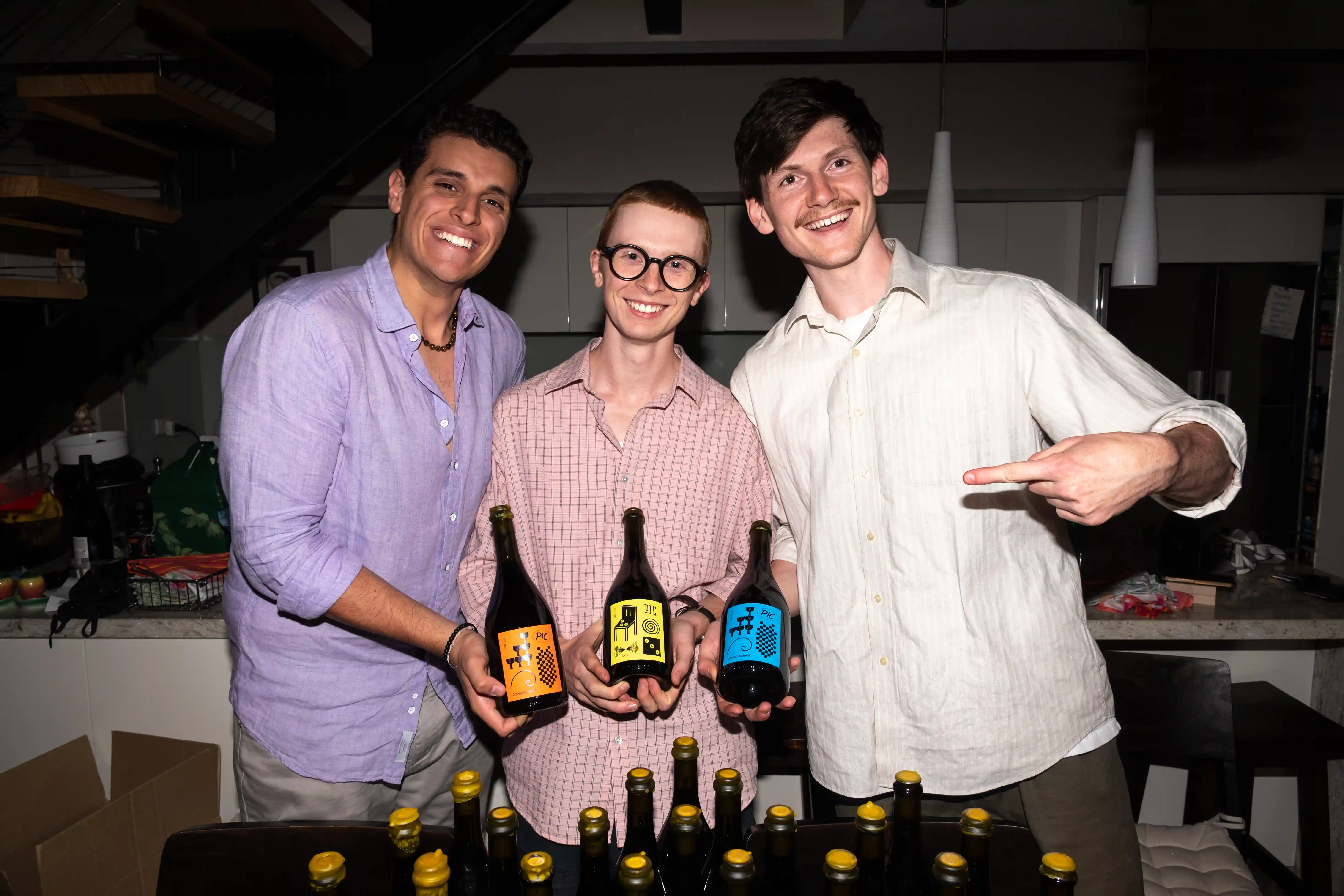
During this time, we decided to name the wine "Pic Espuma". Pic being our house name, and espuma being Spanish for foam or froth.
7. Label
Finally, we added labels to the bottles. This was the last step in the process. I commissioned Sarah to design our labels, she did a great job. Check out her website here. She also spent hours cutting the labels out, which was a major help. The Pic team thanks you.
Most wine bottles have a sticker label, however if you have ever tried to remove one of them, you would know that the glue just doesn't come off. You would have to use some harsh chemicals and maybe a vat or something similar. We opted to use paper labels and starch-based glue. This comes off easily with water, and has the added benefit of being environmentally friendly.
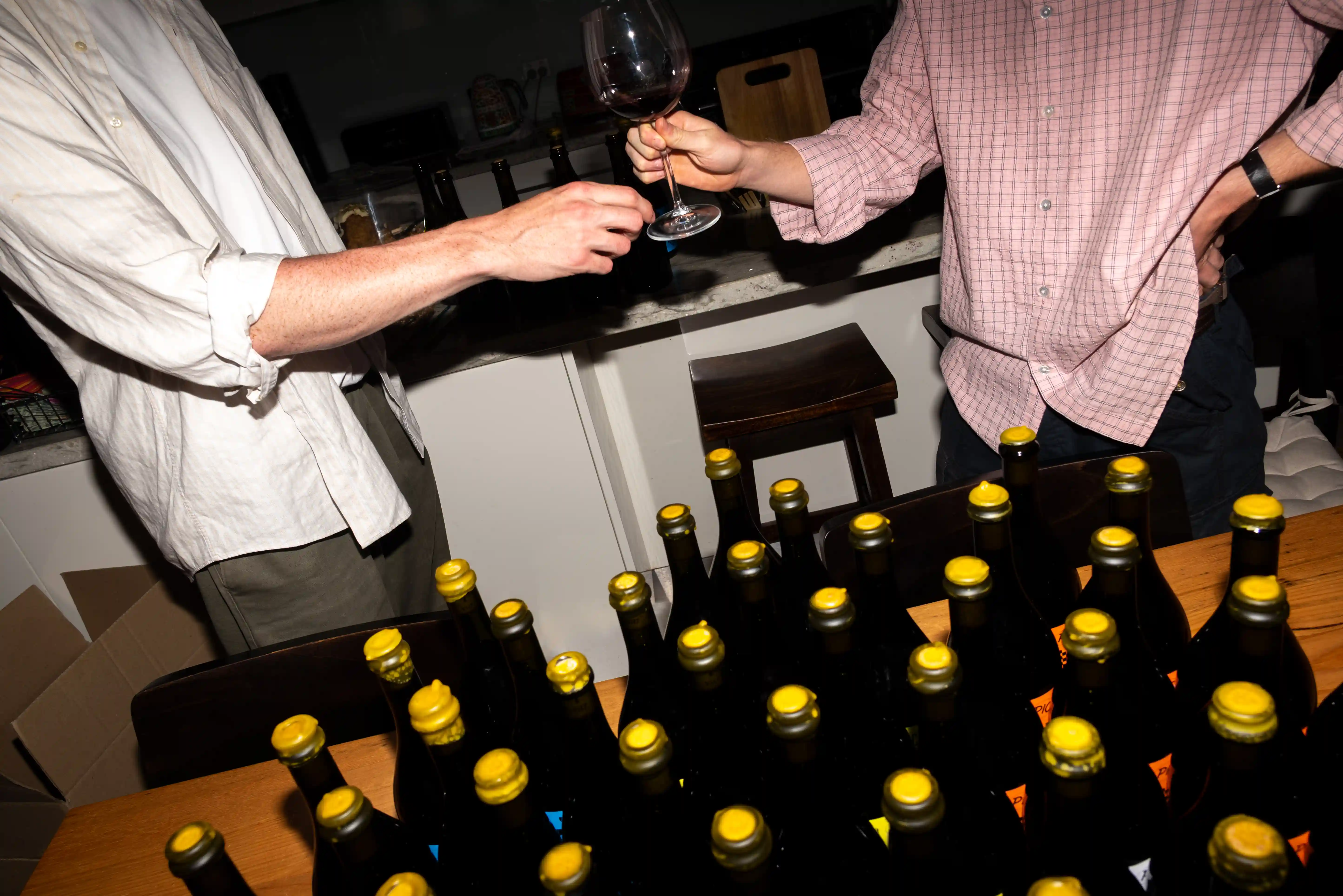
For a finishing touch, my mum had given us some homemade (is it homemade if the bees made it?) beeswax from her hive. It is a small detail but adds a lot to the presentation. It also smells quite nice.
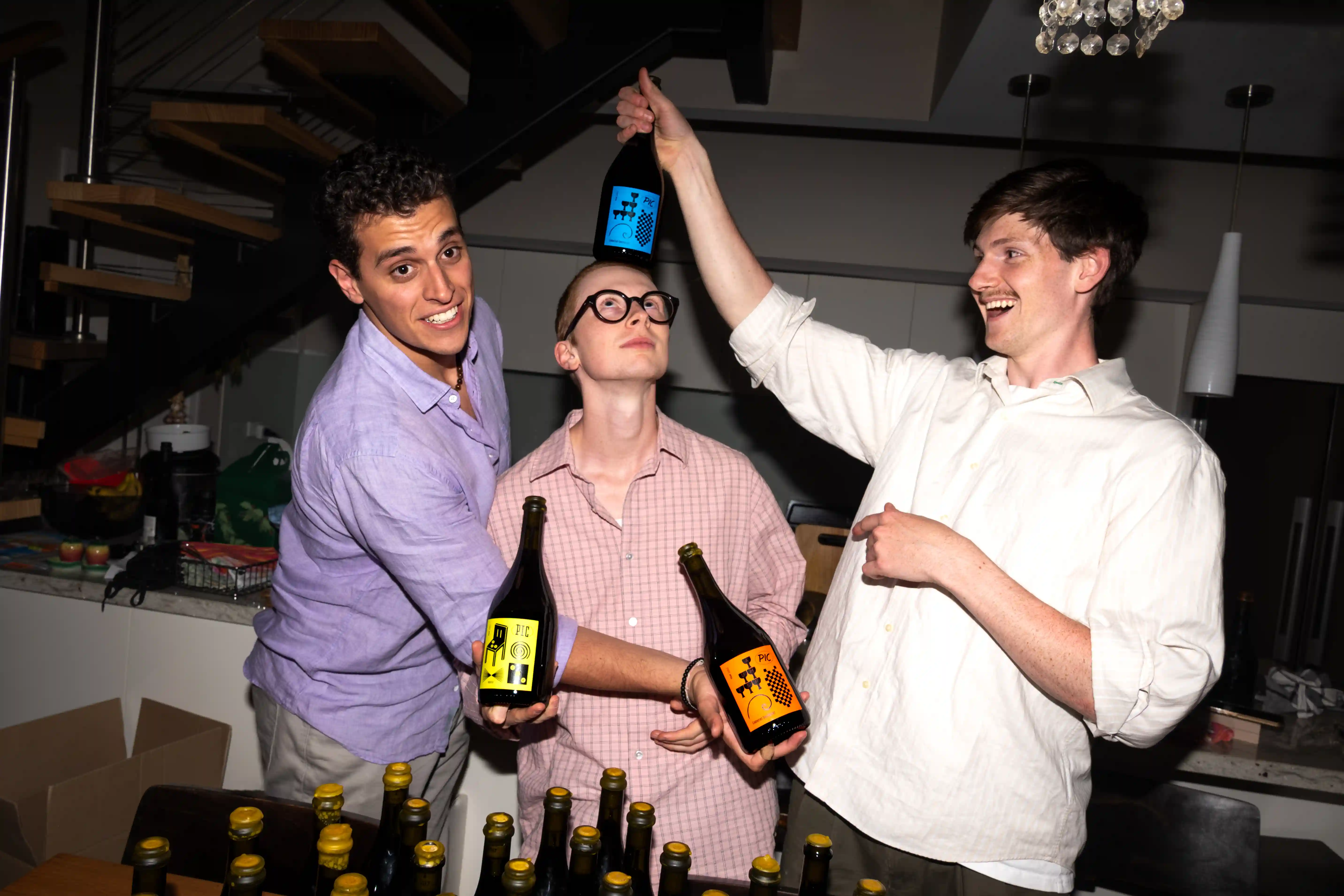
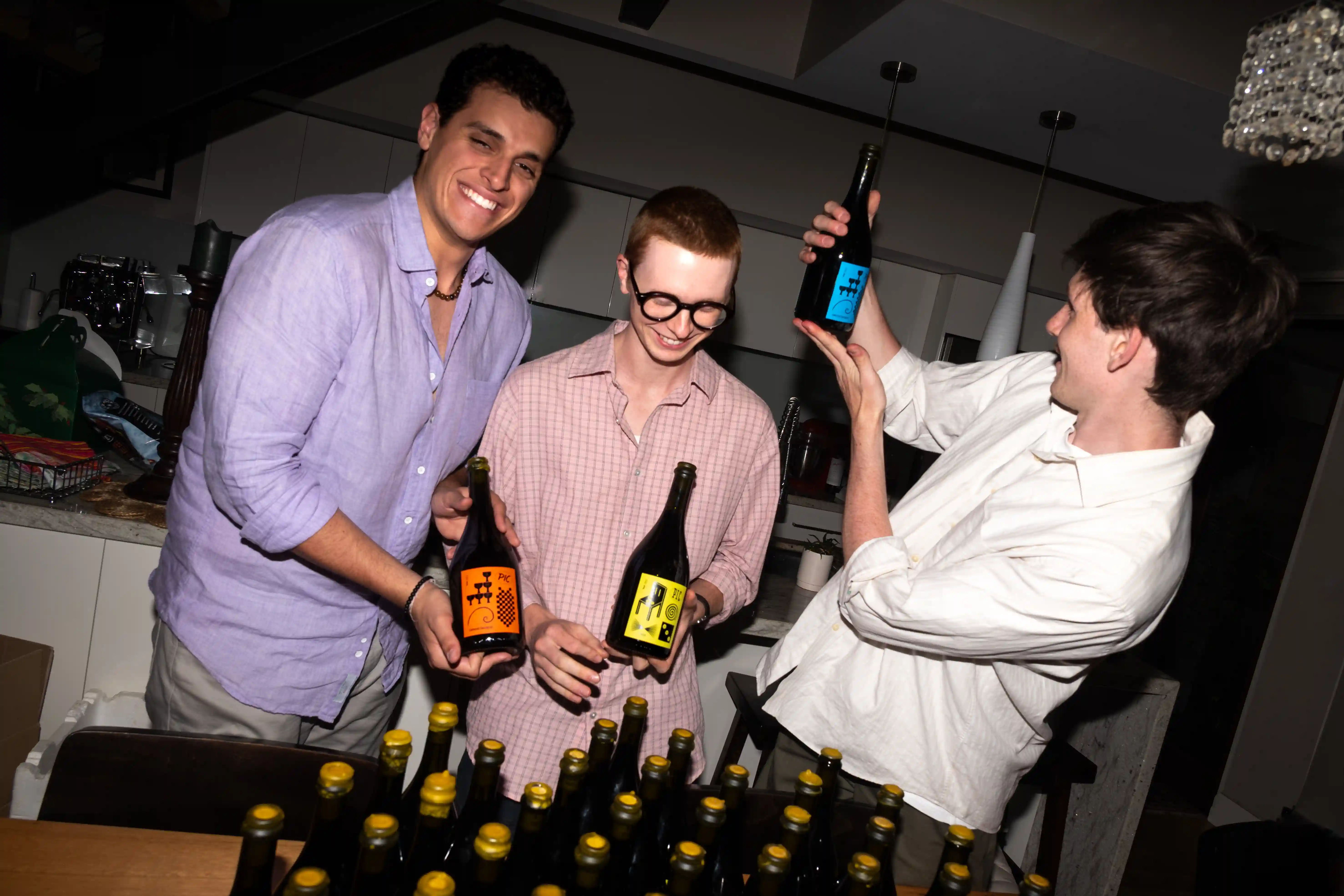
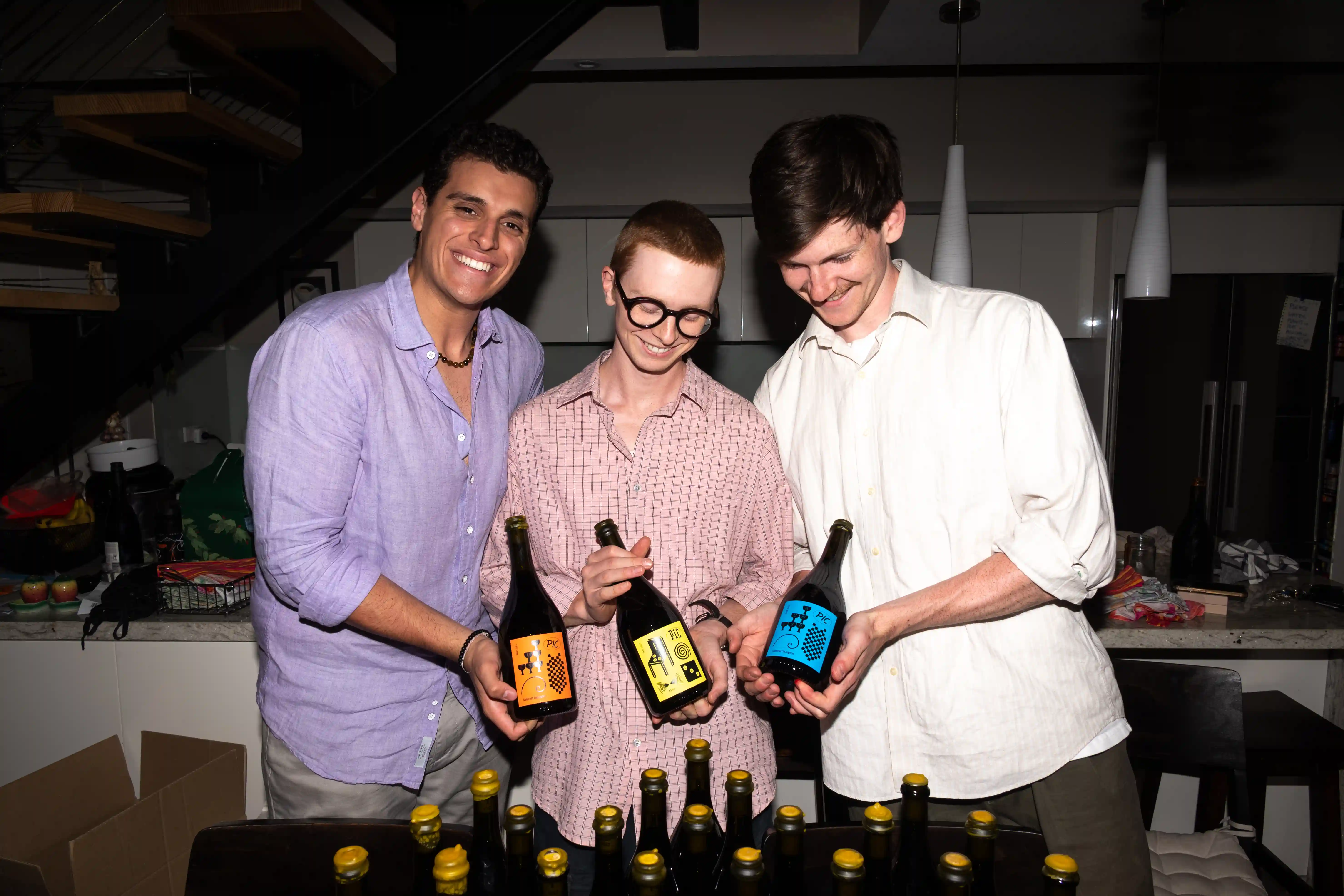
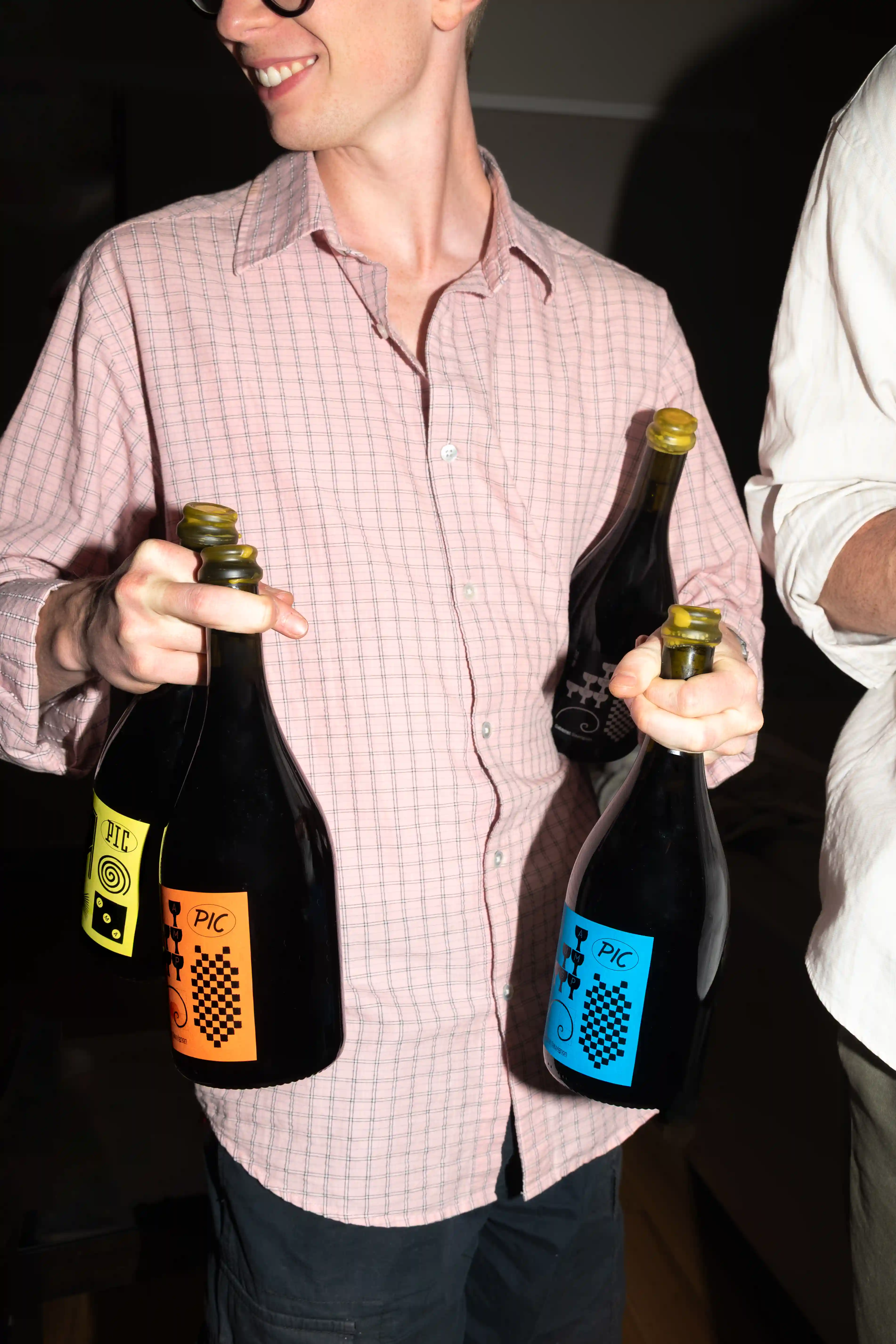
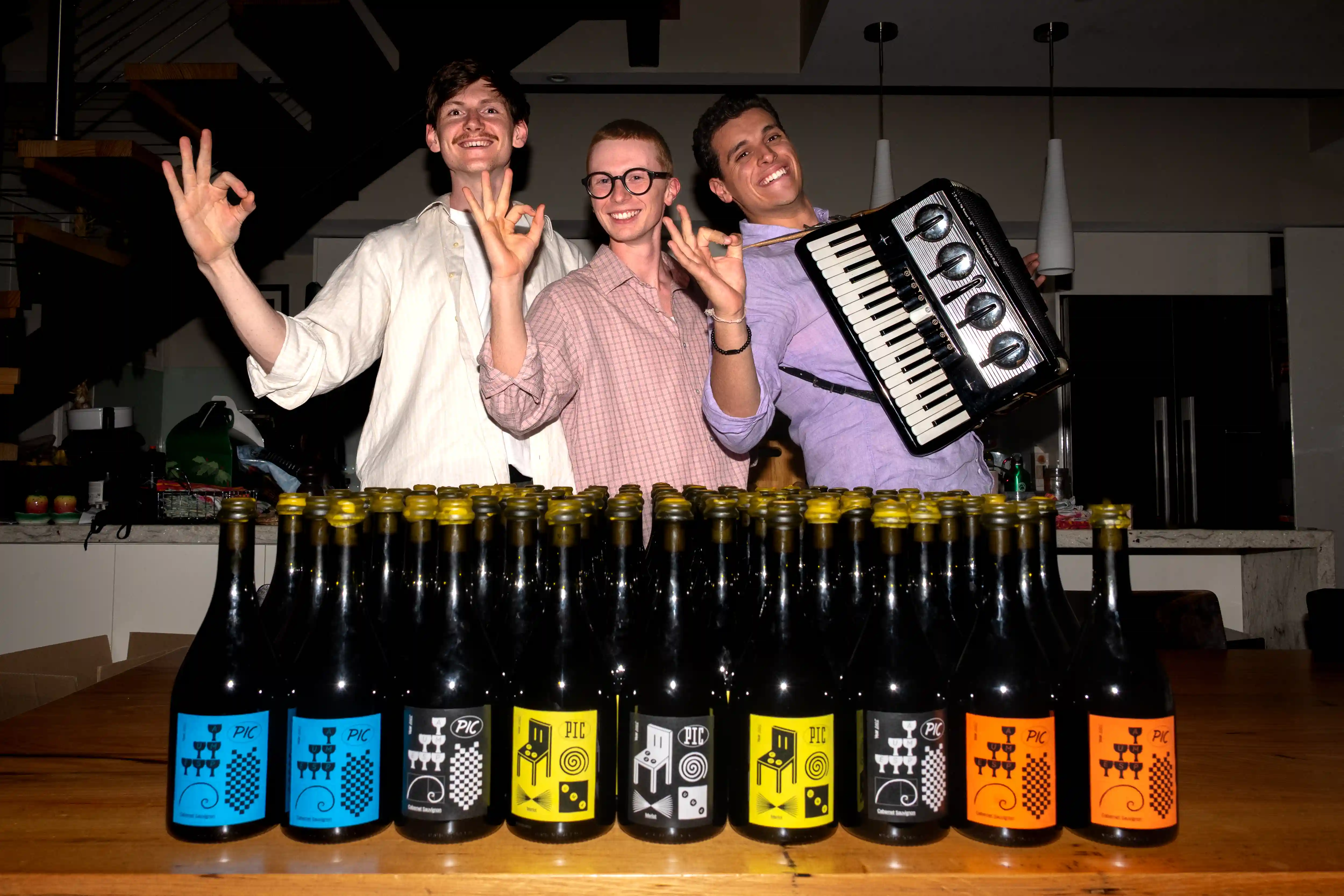
We lined up our bottles and got to work. Merlot was yellow, CB1 was blue, and CB2 orange. We had an assembly line. Alessio was cleaning the bottles, Sarah and Hamish were labelling, and I was sealing the bottles with wax. We had an intermission to eat some pasta, and then continued. It took us about 4 hours to finish the job.
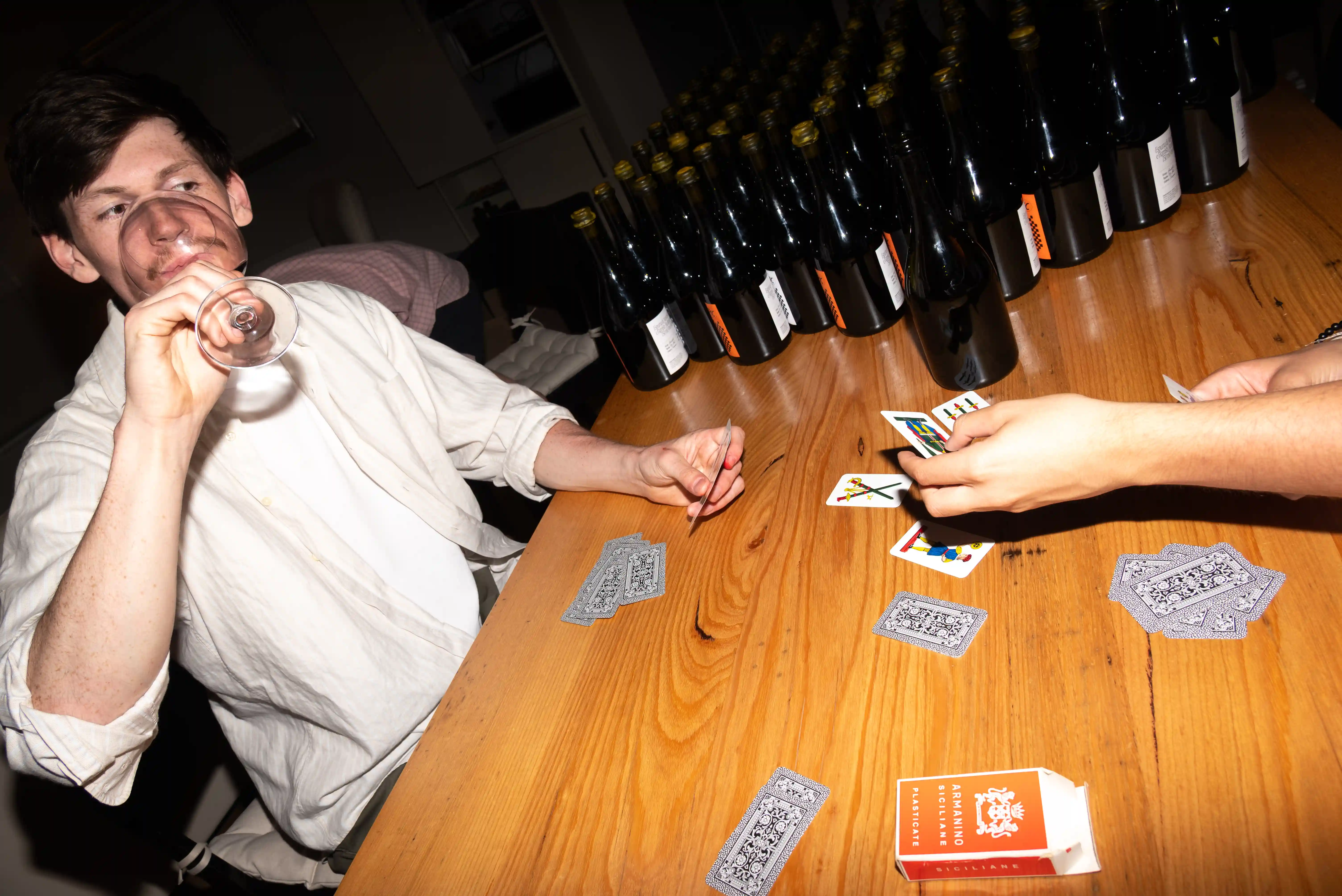
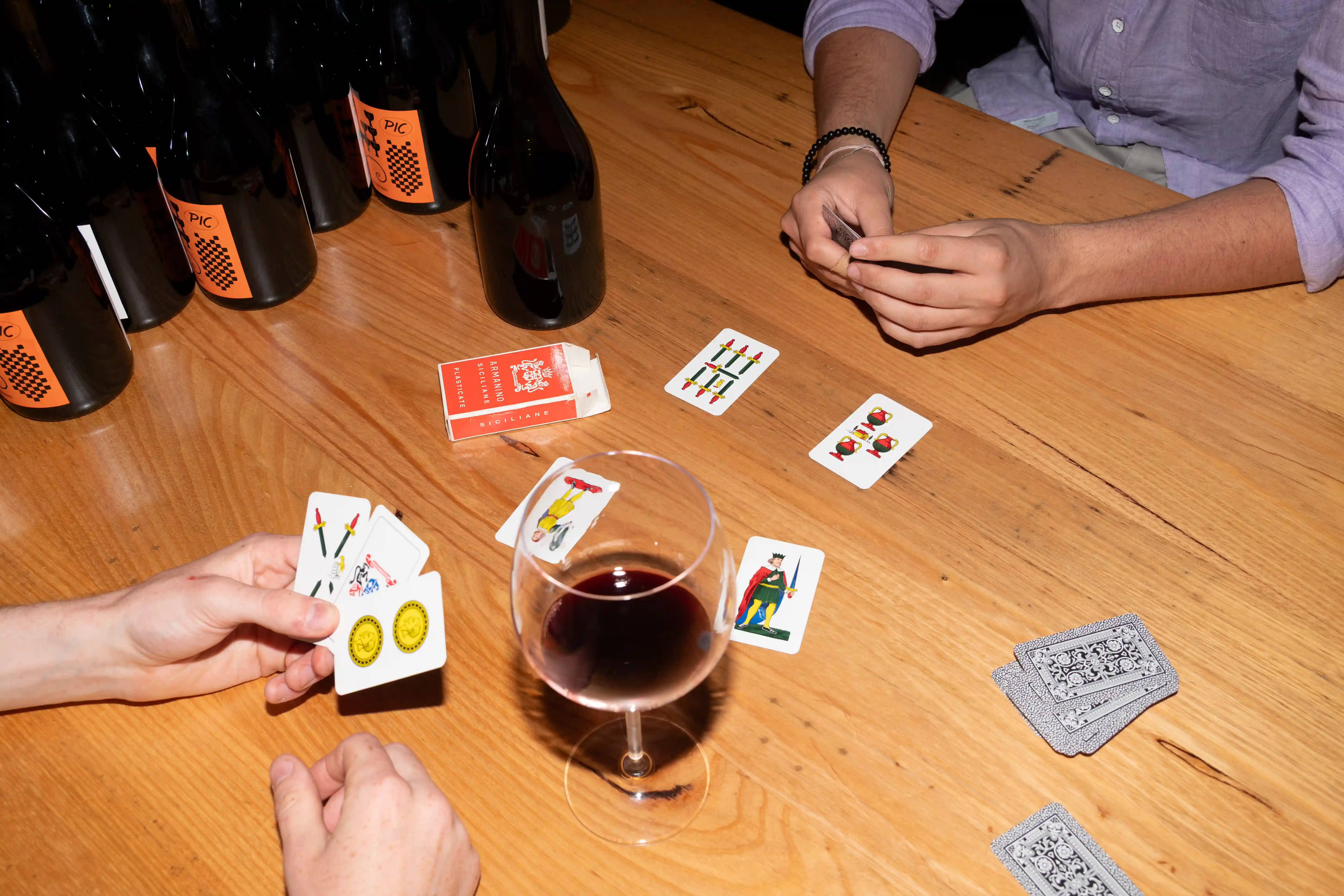
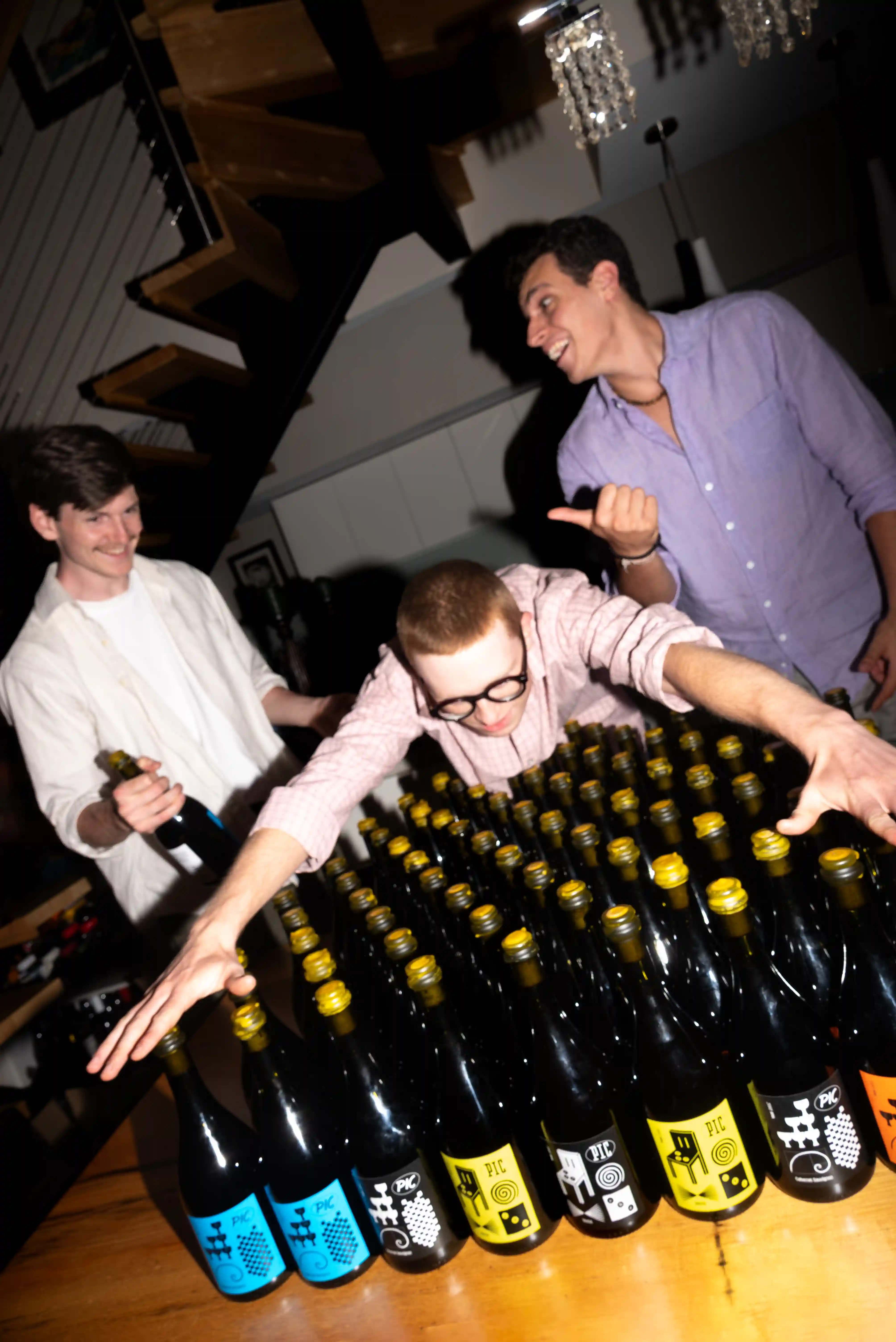
Once we had labelled our bottles, we had a little bit of time to take some pictures and try out the wine, see those below. Thank you for reading, and if you get the chance to try out some of our wine, I hope you enjoy.
Comments
Loading comments...